My Socials, Their Way: Who Gets to Decide What "Distress" Means Under Labor's Digital Duty of Care?
Labor's Digital Duty of Care Bill brings $109.2m fines, undercover eSafety powers and a 'serious distress' harm. Who decides what distress means?
Somewhere in Canberra this week, a word got promoted.
The word is “distress”.
Until now it was a feeling.
Something you got from a parking fine, a Bunnings queue on a long weekend, or the Wallabies in the last ten minutes.
Under Labor's Online Safety Amendment (Digital Duty of Care) Bill 2026, it becomes a category of harm.
And a category of harm needs someone to police it.
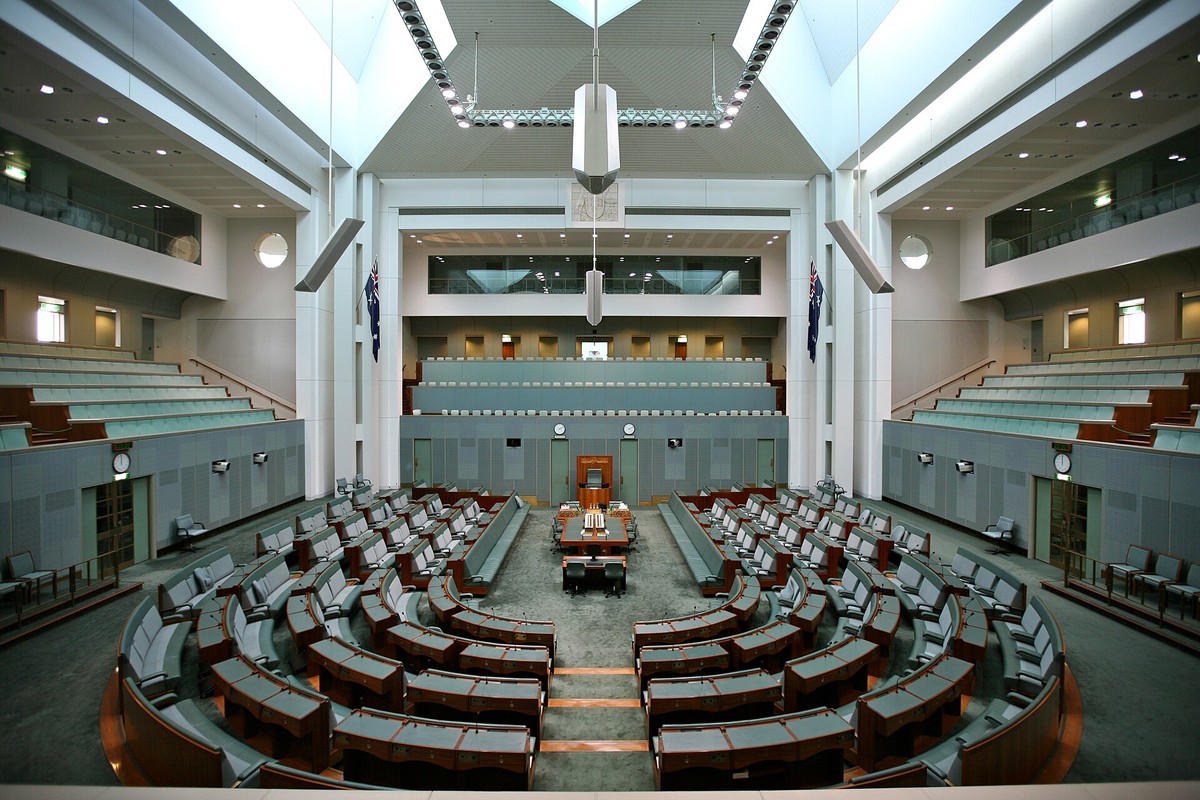
On Wednesday, 28 October 2026, the bill passed the lower house — second reading, detail stage and third reading all done the same day — and still needs the Senate.
Labor has the numbers in the House.
In the Senate, it needs the Greens.
So before this thing becomes law, I'd like to ask the one question nobody in the building seems keen to answer.
Who decides?
What the bill actually says
Credit where it's due.
The Prime Minister didn't hide the detail.
In his speech to the House on Tuesday, Anthony Albanese laid it out.
Platforms will have a positive legal duty to keep Australians safe online.
Social media, online games and AI chatbots must protect under-18s from content promoting eating disorders, pornography, material that glorifies crime or dangerous stunts, “hostile ideas towards women and gender equality”, and “content that causes serious distress, including abuse and bullying”.
Adults get protection from child sexual abuse material, grooming, sexual violence, extreme violence, terrorism, and people menacing or harassing them.
Cyberbullying complaints must be dealt with in 24 hours instead of 48.
Nudify apps get banned.
People 16 and over get the option to switch off the algorithm and see only accounts they follow.
eSafety gets the power, in the PM's words, “to go undercover to make sure that companies are complying with the law”.
And if a company fails the duty, the fine is up to $109.2 million.
Some of that is good.
I'll say it plainly, because the people pushing this bill are going to pretend critics never do.
The grooming stuff is good.
The nudify ban is good.
Letting me switch off the algorithm and just see my mates' fishing photos is the best idea Canberra has had in years.
The parents who lost children and turned grief into a campaign deserve better than to be told they're censors.
They aren't.
But a bill is not judged by its best clause.
It's judged by its loosest one.
The loosest one
“Content that causes serious distress.”
Read it twice.
Then try to write the rule.
Distress to whom?
A 15-year-old in Penrith, or a 15-year-old in Toorak?
A kid who's been bullied for a month, or a kid who just watched a debate on immigration and didn't like how it went?
The PM says the target is abuse and bullying, and that's how the phrase reads in his speech.
Fine.
Then put the word “bullying” in the law and leave “distress” in the dictionary where it belongs.
Because once a word like that is in a statute, the people who interpret it are not the people who wrote the speech.
They're compliance officers at companies based mostly overseas, staring down a nine-figure fine, deciding what Australian teenagers are allowed to see.
And here is the bit Canberra keeps skating past.
To protect under-18s from a category of content, a platform has to know who is under 18, and it has to decide in advance which content falls into the category.
Nobody running a platform is going to build two internets.
They'll build one, set the dial to wherever the regulator is least likely to fine them, and hand it to everyone.
The Coalition said as much back in September, when it opposed the exposure draft.
Its list of concerns included “a powerful incentive to censor first and ask questions later”.
That's not a conspiracy theory.
That's how compliance works.

I spent years as an IT contractor watching government departments do exactly this.
Nobody ever got sacked for blocking too much.
Plenty got sacked for blocking too little.
Hostile to what, exactly?
The second phrase is “hostile ideas towards women and gender equality”.
Nobody sensible wants kids served a steady diet of blokes in rented Lamborghinis telling them women are property.
The PM talked about an “aggressive and sometimes frightening manosphere”, and he isn't making that up.
It's out there.
But “gender equality” is not a fixed point.
It's a live political argument.
Is a mum arguing for single-sex change rooms hostile to gender equality?
Is a footy club debating who plays in the women's comp?
Is a teenager watching a speech by a Senator who disagrees with Labor's gender policy?
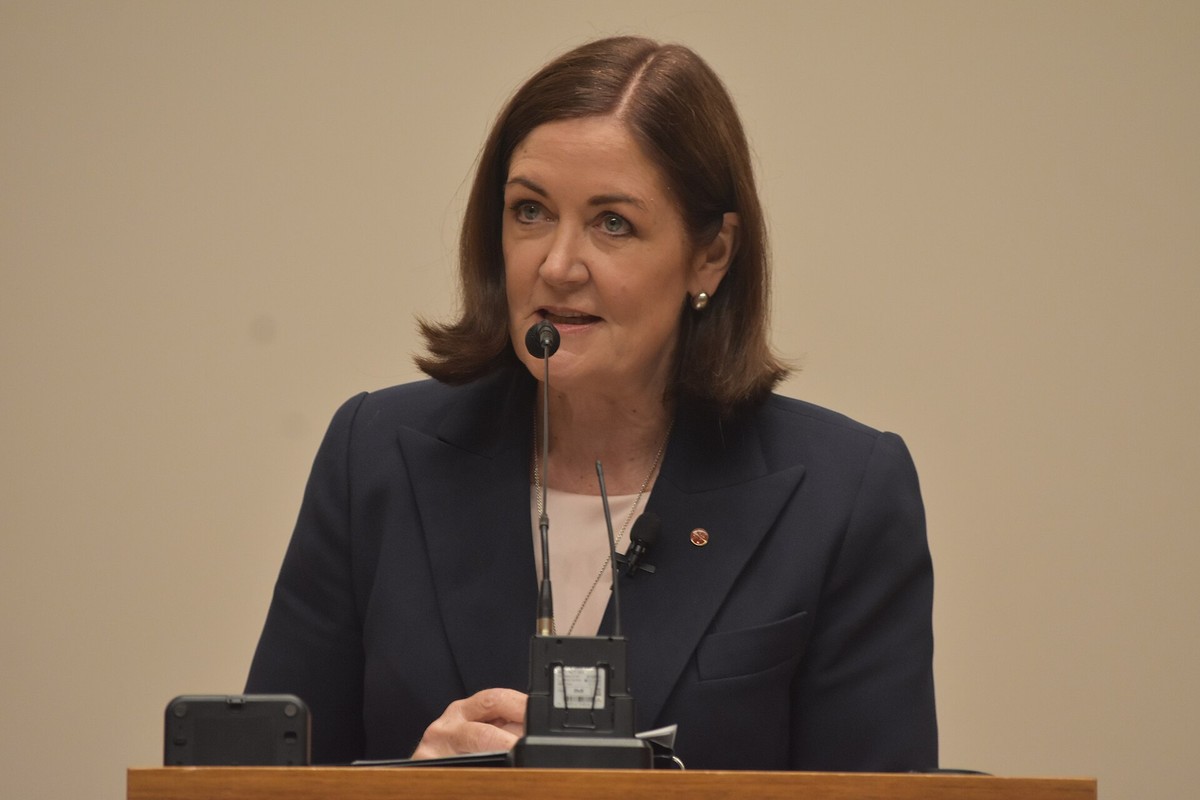
Shadow Communications Minister Sarah Henderson asked the same thing when the bill was introduced on 15 October.
“Who decides what is hostile to gender equality?
Anthony Albanese?
Anika Wells?
An unelected bureaucrat?”
She called the whole thing “censorship dressed up as online safety”.
This week she told News24 the definitions were “dangerously vague”, and the Coalition party room resolved to vote against the bill.
You don't have to love the Liberals to think she asked a fair question.
I'd just like someone in government to answer it with a name rather than a press release.
The gladiatorial arena
On Tuesday night, in what The Nightly reported was her last Senate Estimates appearance in the job, eSafety Commissioner Julie Inman Grant gave her opening statement.
“Social media is no longer the once-envisioned digital town square.
It has become more like a gladiatorial arena.”

It was a sombre statement.
She spoke about the abuse she and her family have copped for years.
Nobody should cop that, and I mean that without a “but”.
Now the “but” anyway, because it's about the job, not the person.
In the same statement, the Commissioner said she believes eSafety needs more than the duty of care.
She wants a private right of action, and “legislation tailored to increasingly violent and threatening online hate”.
She also mentioned that she had proposed a targeted code, aligned with the duty of care, for antisemitic content “and other forms of online vilification”.
I've written about antisemitism in this country before.
I'm not going to pretend it isn't real.
But notice the shape of it.
A duty of care for kids.
Then a code for vilification.
Then legislation for hate.
Each one sounds reasonable on the day.
Each one widens the circle of things a regulator gets to rule on.
When the person running the office tells you the current law is only the first instalment, believe her.
Undercover, with a budget
Then there's the undercover bit.
The PM said eSafety will be able to go undercover to check companies are complying.
Henderson's office describes it as power to create fake “sock puppet” accounts to secretly access online services.
On paper, it's a compliance tool.
Mystery shopping for algorithms.
But think about what it looks like from a kitchen table on the Central Coast.
The regulator that decides what counts as serious distress can now also be one of the accounts in your comments.
My nan kept every Women's Weekly she was ever told to throw out, because she didn't trust anyone else to decide what was worth keeping.
She would have had views on this.
“Nothing could be further from the truth”
To be fair to the government, it has already given ground.
The original exposure draft let the Communications Minister make regulations defining new categories of harm.
After the Greens and the Coalition both objected, AAP reported, that power was moved to Parliament.
Good.
That's a real fix, and Anika Wells deserves credit for making it.
And the Prime Minister went out of his way on Tuesday to say it.
“Now, some have suggested this is about censorship.
Nothing could be further from the truth.”
“This is not about preventing mean comments or political debate.”
I believe he believes that.
The trouble is, he won't be the one applying it.
Prime Ministers come and go.
Commissioners come and go.
The words in the Act stay put, and they get read by whoever has the job next, with whatever politics they bring.
That's why you write laws as though the person you trust least will one day be in charge of them.
The PM's best line was this one: “Rather than someone in the United States deciding what they see, they get to decide themselves.”
I agree.
So let me decide.
Give me the switch to turn off the algorithm, and keep it.
Make the platforms answer complaints, and give us the free ombudsman the crossbench's Sophie Scamps is pushing for, so there's somewhere independent to go when a tech giant locks you out.
Go hard on grooming, threats and nudify apps.
Then take “distress” out of the law and replace it with things a court can actually measure.
What happens next
The bill goes to the Senate, where Labor needs the Greens.
The Greens want it tougher.
Sarah Hanson-Young told the ABC she wants “real teeth”, bigger fines and the right to sue big tech.
A Senate committee is due to report on 20 November, and submissions close on 30 October.
So there's a window.
Small, but open.
If you've got a view, this is the week to put it in writing, because once these definitions are law, the argument about what counts as distress won't be held in Parliament.
It'll be held in a content-moderation queue somewhere, by someone you'll never meet, working from a guideline you'll never see.
My socials.
Their way.
Unless the Senate reads the bill more carefully than the House did.
No pressure, Senators.
And Remember:
Trust no Single Source
Trust Your Gut
and Stay Curious
Lee Robbins
For media enquiries, please contact:
UK - 020 3404 2295
USA - 0650 702 7445
AUS - 02 9072 9499
Help Support Lee Robbins and the rest of our Authors by visiting the store to get your copy of the latest Anonymous Author Novel or Anything Anonymous.
 Visit the store
Image credits: House of Representatives chamber by Alex Proimos (CC BY 2.0); smartphone apps by mikemacmarketing (CC BY 2.0); Julie Inman Grant via Digital Platform Regulators Forum (CC BY 4.0); Sarah Henderson by Alison Newman (CC BY-SA 4.0). All via Wikimedia Commons.