Listen to the Mums: Why Does It Take a Dead Toddler Before a Parent's Word Counts?
A parent's worry will now trigger urgent checks in England's A&Es. Sally Joe asks why it took a toddler's death in a corridor to get here.

Every mum in Britain knows the feeling.
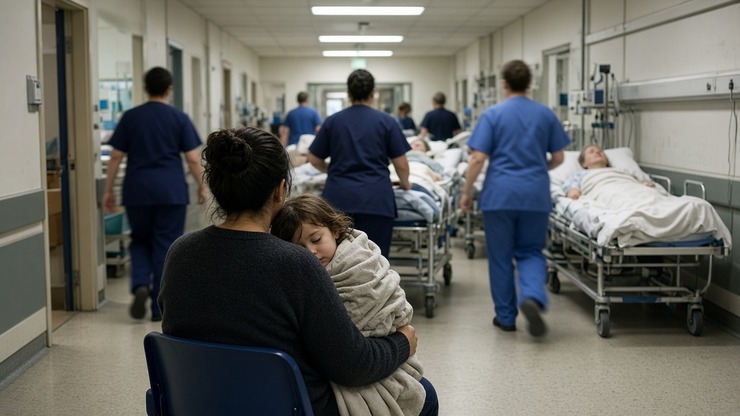
You're sat on a plastic chair at some ungodly hour, your child is floppy on your lap, and a voice in the back of your head is screaming that something is wrong.
Not “a bit poorly” wrong.
Wrong wrong.
And then somebody with a lanyard and a clipboard and forty other patients tells you to hang on.
So you hang on.
Because you're polite.
Because you're British.
Because you don't want to be that parent.
This week the NHS in England announced that, from now on, a parent's worry in A&E will officially count.
If you're frightened your child is getting worse, that fear will trigger an urgent review.
Brilliant.
Genuinely.
I mean that.
But I'd like somebody in Whitehall to explain to me why it took a two-year-old boy dying after nine hours in a hospital corridor to get us here.
Nine hours on a chair
His name was Finlay Roberts.
His family called him Finny.
On 11 July 2024 he woke up with a tummy ache.
His GP told his parents to take him to the children's emergency department at the Whittington Hospital in north London.
So they did.
Exactly what you're supposed to do.
They arrived at about quarter past four in the afternoon.
According to the family's solicitors, Leigh Day, Finlay was there until roughly one o'clock the next morning.
Nine hours.
His dad, David, described it as “the stuff of nightmares”, nine hours “sitting on chairs” in the corridors.
The department was so packed that key examinations were done in the corridor, with Finlay sat on his dad's knee.
ITV News reported that his mum, Liz, had to give her critically ill little boy a suppository while sitting on a chair in a public area.
Read that again.
A mother, in a corridor, in front of strangers, doing a nurse's job for her own dying child.
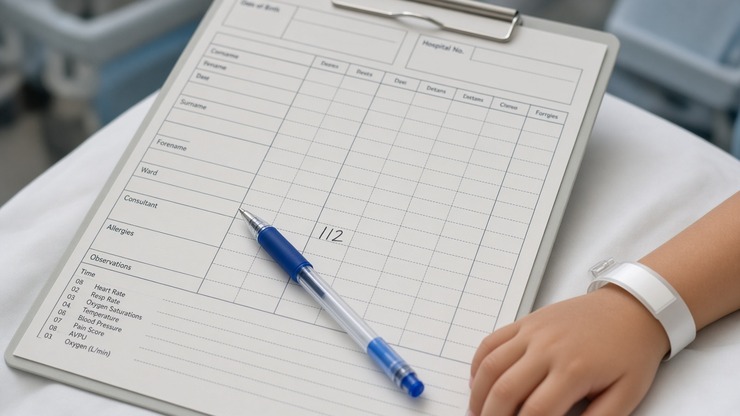
In nine hours, Finlay had one partial set of observations.
One.
Doctors told the inquest that observations should be done at least every four hours in A&E.
His parents asked, more than once, for him to be transferred to Great Ormond Street, a few miles down the road, for tests the Whittington couldn't do.
They were rebuffed.
Then he was sent home at about 1am and told to come back the next day.
He never got the chance.
Hours later, Finlay was gone.
What the coroner actually said
I want to be careful here, because Finlay's family deserve accuracy, not a tabloid scream.
The Senior Coroner for Inner North London, Mary Hassell, found that Finlay died from a sigmoid volvulus, a twisted bowel.
She called it rare in a child but a recognised natural cause.
She said it was unclear whether different care that night would have saved his life.
And then she wrote six words I can't get out of my head.
“It would have given him a chance.”
In her Prevention of Future Deaths report she said the paediatric emergency department was understaffed and that it was “an extremely busy night”.
She said the lack of serial nursing observations was “a fundamental omission”.
The discharging doctor had decided Finlay could go home if his final observations were normal.
Those observations were never carried out.
He went home anyway.
Here's the bit that should have every health minister awake at night.
The coroner had already written to a different London hospital, the Royal Free, about missing children's observations after the death of another child, Billie Wicks.
In March 2025.
Months before Finlay's inquest.
Her words: a lack of nursing observations “may be a much wider issue than is recognised”.
She said nothing about the Whittington or the Royal Free stood out as unusual.
Nothing unusual.
That's the scandal.
Not one bad hospital.
A normal one.
This isn't about the nurses
Now, before anyone accuses me of having a go at NHS staff, let me stop you right there.
I love nurses.
My mum waited months for her treatment and was let down over and over by poor communication.
Do you know who held her hand and actually told her what was going on?
A nurse.
On a twelve-hour shift.
Who hadn't had her break.
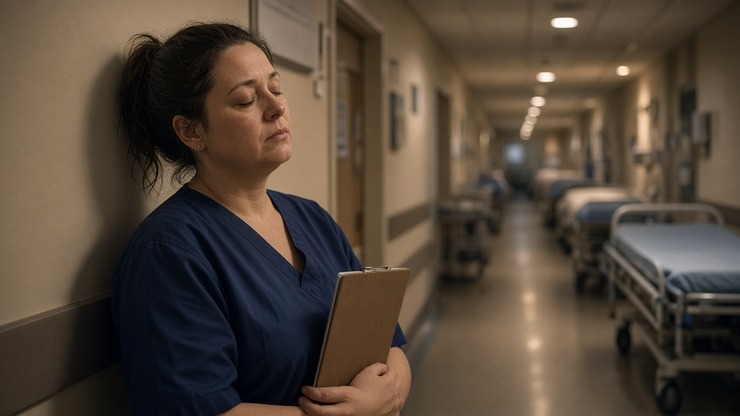
The people working in that A&E on that July night were not villains.
They were drowning.
NHS England's own figures show 99,290 recorded instances of corridor care in England in September.
That's an average of 3,310 a day, the highest since the figures were first published in May.
The Royal College of Nursing called it entrenched, with winter only weeks away.
Three thousand people a day being cared for in corridors, waiting rooms and anywhere else they can find a gap.
Before winter has even properly started.
You can't do four-hourly observations on a child when you've got thirty patients lined up along a wall and two pairs of hands.
You can't close the loop with Great Ormond Street when the X-rays turn up late and the phone won't stop ringing.
The staff didn't build that corridor.
Politicians did.
Years of them.
Every colour of rosette.
The new rules
So, what's actually changing?
According to the BBC, a new National Paediatric Early Warning System, known as PEWS, is being rolled out in emergency departments across England.
Staff will check, log and grade a child's vital signs, such as heart rate, blood pressure and oxygen levels.
A high overall score means the child needs more urgent attention.
And this is the part I want tattooed on the forehead of every hospital chief executive: concerns from staff, parents, carers or the child themselves will trigger an immediate escalation of care.
Not “will be noted”.
Not “will be taken into account”.
Will trigger.
More than 90 hospitals in England already use the system on their children's wards.
Now it's coming to A&E, where, frankly, it should have been from day one.
On top of that, the NHS has said it will expand Martha's Rule to every emergency department in England.
That gives patients and families the right to ask for a rapid review if they're worried someone is getting worse and nobody's listening.
A&E units will have a dedicated phone number for it.
England's chief nursing officer, Duncan Burton, said staff need to spot quickly when a child's condition is deteriorating, “when every moment matters”.
He's right.
Every moment does matter.
Ask Finlay's mum and dad which moments they'd like back.

Martha, Finlay, and the next one
Martha's Rule is named after Martha Mills.
She was 13 when she died in 2021 at King's College Hospital in London, after developing sepsis following a bike accident.
A coroner ruled that her family's concerns about her worsening condition were not listened to and that she would probably have survived if she'd been moved to intensive care earlier.
Her parents, Merope and Paul, came up with the idea of the rule themselves.
Let that sink in.
Grieving parents had to design the safety system.
Because the people paid to run the NHS hadn't.
And now it's the same story again.
Finlay's parents went on television.
They spoke to ITV.
They relived the worst night of their lives in front of the nation.
Only then did the Health Secretary, Yvette Cooper, sit on the BBC sofa, apologise on behalf of the NHS, and say: “No child should be treated in a corridor.
No patient should be treated in a corridor.”
She's promised new standards for children in A&E, figures on child corridor care broken down by age for the first time, and to make ending corridor care for children a priority.
The wider pledge is to end it for everyone by the end of this Parliament.
Good.
I'll hold her to it.
But forgive me if I don't throw a street party.
Apparently nobody in the Department of Health thought to count how many children were being treated in corridors until a television investigation started digging.
Nobody.
In 2026.
What I want
So here's my position, plainly.
I'm glad PEWS is coming to A&E.
I'm glad Martha's Rule is spreading.
I'm glad a mum's worry is finally written into the rulebook instead of being treated as a nuisance.
But a rule on a laminated poster means nothing if there's no nurse free to act on it.
I want the money to follow the promises.
More paediatric nurses on the night shift.
Enough beds that a two-year-old isn't triaged on his dad's knee.
A real date, not “by the end of the Parliament”, for the last child to be pulled out of the last corridor.
I want every hospital to publish its children's corridor numbers, every month, where the rest of us can see them.
And I want politicians to stop waiting for a funeral before they find their conscience.
Finlay's parents told ITV that corridor care was “one of several failings” he suffered, failings which, in the coroner's words, “denied him a chance at life”.
His mum said corridor care “robs people of their dignity”.
She's right.
It robs them of their dignity.
It robs them of their time.
And sometimes it robs them of their child.
So the next time a mum on a plastic chair says something is wrong, don't tell her to hang on.
Listen to her.
She's usually right.
And Remember:
Trust no Single Source
Trust Your Gut
and Stay Curious
Sally-Joe
For media enquiries, please contact:
UK - 020 3404 2295
USA - 0650 702 7445
AUS - 02 9072 9499
Help Support Sally-Joe and the rest of our Authors by visiting the store to get your copy of the latest Anonymous Author Novel or Anything Anonymous.
 Visit the store