


Pauline Hanson: The Politician They Couldn't Make Disappear

There are politicians you agree with.
There are politicians you disagree with.
And then there are politicians who make the establishment visibly uncomfortable simply by refusing to read from the script.
Pauline Hanson has spent almost thirty years in that third category.
You don't have to agree with everything she says.
In fact, you can disagree with quite a lot of it.
But there is something increasingly unusual about Hanson in modern Australian politics.
She actually appears to believe the things she says.
And in an age when political communication increasingly resembles a hostage video recorded by a committee of lawyers, that is worth examining.
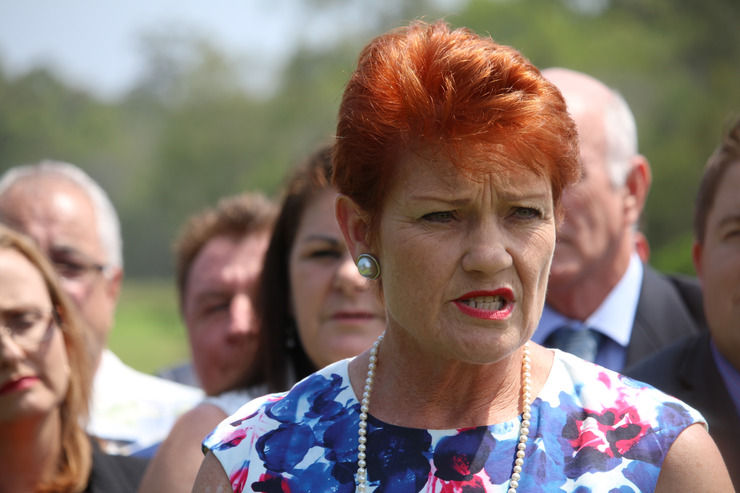
Before One Nation
Pauline Lee Hanson was born in Brisbane in 1954.
Before politics, she was a small-business owner and mother of four.
She entered local politics in Ipswich, winning a council seat in 1994.
Then came 1996.
Hanson was selected by the Liberal Party to contest the federal seat of Oxley.
During the campaign, she made controversial comments about Aboriginal affairs and was disendorsed by the Liberals shortly before polling day.
There was just one problem.
The ballot papers had already been printed.
Her name remained beside the Liberal designation.
She won.
And suddenly Australia had a new independent MP who had been thrown out of the political tribe that had just helped put her on the ballot.
Her maiden speech in September 1996 made her famous.
It also made her radioactive.
The speech contained her controversial warning that Australia was in danger of being “swamped by Asians”.
The phrase became one of the defining political controversies of the decade.
Her opponents saw racism.
Her supporters saw somebody finally saying what they believed politicians were afraid to say.
That distinction would follow Hanson for the rest of her career.
Then came One Nation
In 1997 Hanson, David Oldfield and David Ettridge established One Nation.
The party exploded onto the political landscape.
At the 1998 Queensland election, One Nation received almost 23 per cent of the primary vote and won 11 seats.
That wasn't a fringe protest.
That was a political earthquake.

And earthquakes tend to annoy the people living in expensive houses.
The major parties had a problem.
They couldn't simply ignore Hanson because millions of Australians weren't ignoring her.
So the battle moved beyond elections.
And this is where the history gets particularly interesting.
The establishment fight
In 1998, Tony Abbott established the Australians for Honest Politics trust to help bankroll legal action against One Nation.
Abbott later openly acknowledged that he had been actively working against the party because he considered its influence destabilising and counterproductive.
The fund raised close to $100,000.
Abbott also acknowledged making a financial commitment relating to legal action involving former One Nation figure Terry Sharples.
This wasn't a conspiracy theory.
It was documented political history.
Abbott himself defended his involvement.
He said his intentions were honourable and that challenging One Nation was important.
Fair enough.
Political parties are allowed to oppose political parties.
That's democracy.
But it does rather demolish the sanitised version of history where Hanson simply wandered off into the wilderness because Australians stopped listening.
They didn't.
The political establishment actively fought her.
And eventually Hanson ended up in prison.
The conviction that didn't survive the appeal
In 2003, Hanson and Ettridge were convicted of electoral fraud and sentenced to three years imprisonment.
Hanson had been convicted over allegations involving the registration of One Nation and almost $500,000 in electoral funding.
She went to prison.
For eleven weeks.
Then the Queensland Court of Appeal overturned the convictions.
The appeal court allowed the appeals, quashed the convictions and directed that verdicts of acquittal be entered.
That isn't a minor footnote.
That is an extraordinary chapter in Australian political history.
Imagine being sentenced to three years in prison and then having the conviction overturned on appeal.
Imagine the effect that would have on your relationship with politicians, institutions and the machinery of government.
Most people would probably develop a fairly unhealthy relationship with the word “establishment”.
Hanson came out of prison and kept going.
She disappeared.
Sort of.
After the collapse of One Nation in the early 2000s, Hanson contested elections under different banners and as an independent.
She eventually returned to One Nation.
In 2014 she became leader again.
In 2016 she returned to federal Parliament as a Queensland senator.
She was re-elected in 2022.
And in the 2025 federal election, One Nation doubled its Senate representation to four, with senators elected in Queensland, New South Wales and Western Australia.
The AEC confirms the election of One Nation's Warwick Stacey in NSW, while One Nation's own records note the party's four-member Senate team.
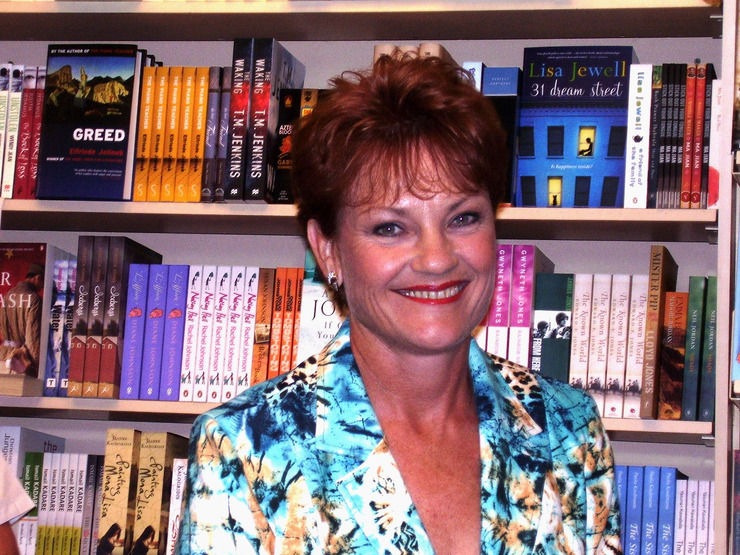
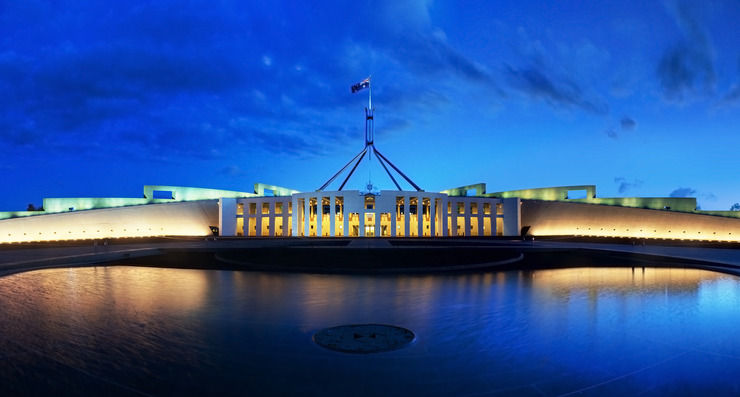
Nearly thirty years after she first walked into Parliament, the woman many assumed would be politically finished was still sitting there.
Apparently the political cockroach had survived another nuclear winter.
And now she's rising again
This is the part the political class should probably pay attention to.
One Nation isn't merely surviving.
It is polling at levels that would have seemed absurd a few years ago.
Roy Morgan had One Nation at 25.5 per cent nationally in September 2026, narrowly ahead of Labor on primary support.
Another Roy Morgan poll in August put One Nation level with Labor at 27 per cent.
And in September, One Nation won the Secret Harbour by-election in Western Australia with a huge swing, taking 39 per cent of the primary vote and winning 57–43 on two-party-preferred terms.
The exact numbers will move.
Polls are not election results.
But the direction is difficult to dismiss.
People are listening.
Why does Anonymous care?
This is where we need to separate politics from principle.
Anonymous Publishing does not have to agree with every Pauline Hanson policy.
Nor should it.
A free society isn't supposed to operate on the principle that you defend free speech only when somebody says something you like.
That's not free speech.
That's having a favourite opinion.
The real test comes when somebody says something you find offensive.
Something stupid.
Something provocative.
Something you think is completely wrong.
Do you defend their right to say it?
Or do you suddenly discover that censorship is perfectly acceptable when applied to somebody you dislike?
That is the test.
And Hanson has repeatedly positioned herself on the side of resisting restrictions on political speech.
In 2025, One Nation opposed legislation it argued could threaten free expression, while simultaneously saying it supported tougher penalties for violent terrorism.
You can disagree with its interpretation of particular legislation.
But the underlying argument is legitimate.
Governments should be extremely careful about creating new mechanisms capable of restricting political speech.
Because governments change.
Today your government might censor the people you despise.
Tomorrow it might censor you.
Funny how that possibility tends to make censorship look considerably less attractive.
The autonomy question
There is another reason Hanson has found an audience.
Personal autonomy.
The basic idea that adults should have a considerable say over what they do with their own lives, their own property, their own money and their own bodies.
That doesn't mean society has no rules.
Of course it does.
Civilisation requires laws.
But there is a growing political instinct that whenever something goes wrong, the answer must be another regulation, another prohibition, another reporting requirement, another government program or another bureaucratic committee.
Eventually the citizen becomes a customer service number.
Hanson's appeal partly comes from saying:
Hang on.
Maybe adults can make some decisions for themselves.
That doesn't make every Hanson policy correct.
It does make the question worth asking.
The question behind the politician
For me, this is where the Hanson phenomenon becomes much more interesting than Hanson herself.
Listen to politicians answering questions.
Really listen.
One politician gets asked a question and delivers a beautifully polished paragraph that somehow manages to answer absolutely nothing.
Another begins with:
“I think what Australians really want…”
Oh good.
Here comes the approved answer.
Then someone asks a difficult question and suddenly the politician is discussing a completely different subject.
You can almost hear the teleprompter sweating.
Hanson's appeal is partly the opposite.
She is prepared to argue.
She is prepared to be unpopular.
She is prepared to say things that generate outrage.
Sometimes she gets it wrong.
Sometimes she goes too far.
Sometimes her opponents have a legitimate criticism.
And sometimes her critics deliberately reduce a complicated argument to the worst possible interpretation.
All of those things can be true simultaneously.
That's politics.
And yes, Hanson has baggage
Any honest examination has to acknowledge it.
Hanson has made comments throughout her career that have caused genuine offence.
In 2024, the Federal Court found that a 2022 post directed at Greens senator Mehreen Faruqi breached section 18C of the Racial Discrimination Act and was not protected by the relevant exemption.
That matters.
Free speech does not mean freedom from criticism.
It doesn't mean every statement is wise.
And it doesn't mean every controversial politician is automatically a martyr.
Hanson should be scrutinised.
Hard.
But so should everyone else.
That is precisely the point.

The litmus test
Here is my test for politicians.
Forget the party logo for a moment.
Forget whether they're Labor, Liberal, Green, One Nation or something else entirely.
Ask them a difficult question.
Then watch what happens.
Do they answer it?
Do they engage with the actual argument?
Do they acknowledge a weakness in their position?
Do they challenge the premise?
Do they explain why they disagree?
Or do they reach for the laminated answer?
Because genuine political debate requires something increasingly rare.
Conviction.
Not marketing.
Not focus-grouped sincerity.
Not whatever phrase the communications director believes will perform best on television.
Conviction.
You don't have to agree with Pauline Hanson to recognise that she has built an extraordinarily long political career around being willing to say things that many politicians would rather avoid.
That has consequences.
Sometimes those consequences are deserved.
Sometimes they aren't.
But the willingness to walk into the argument matters.
Why this matters beyond Hanson
This isn't really about Pauline Hanson.
Not entirely.
It is about what happens to a democracy when political disagreement becomes something to be managed rather than debated.
If the answer to an unpopular opinion is ridicule, censorship, deplatforming or legal warfare, eventually politicians learn something very dangerous.
They learn which subjects they are allowed to discuss.
And once politicians learn that, voters learn it too.
The boundaries of acceptable debate quietly move.
Nobody announces the new boundary.
There is no ribbon-cutting ceremony.
One day you simply discover that something which was perfectly ordinary to discuss ten years ago now requires a lawyer, a disclaimer and three cups of coffee.
That's how free speech disappears.
Not necessarily with a bang.
Sometimes it goes out through the side door while everyone is arguing about something else.
The strange achievement of Pauline Hanson
Perhaps the greatest achievement of Pauline Hanson isn't any individual policy.
It is longevity.
She was supposed to disappear.
She didn't.
One Nation was supposed to disappear.
It didn't.
The movement was supposed to be politically toxic forever.
Yet today One Nation holds four federal Senate seats, has demonstrated substantial electoral momentum and is polling well above its 2025 election result.
The establishment can call that whatever it wants.
Populism.
The far right.
A protest vote.
A dangerous movement.
A backlash.
Maybe some of those descriptions contain pieces of the truth.
But there is another possibility.
Maybe a lot of ordinary Australians are simply sick of being told what they are allowed to think.
And perhaps they aren't particularly interested in politicians who speak in paragraphs designed by committee.
They want somebody to answer the bloody question.
That doesn't make Pauline Hanson infallible.
It makes the conversation necessary.
And for Anonymous Publishing, that is where the principle comes in.
Free speech isn't supposed to protect the comfortable.
It exists for the uncomfortable.
The unpopular.
The irritating.
The provocative.
The people who make dinner parties awkward.
Especially them.
Because if freedom only applies to opinions that have already been approved by the establishment, it isn't freedom at all.
It's permission.
And permission can be withdrawn.
So disagree with Hanson.
Challenge her.
Debate her.
Pull apart her policies.
Call her wrong when you believe she's wrong.
But don't try to silence her simply because you don't like what she says.
Because the day we decide that only the people we agree with deserve a microphone is the day we've misunderstood what the microphone is for.
And perhaps that is the real Pauline Hanson story.
Not that everyone agrees with her.
Far from it.
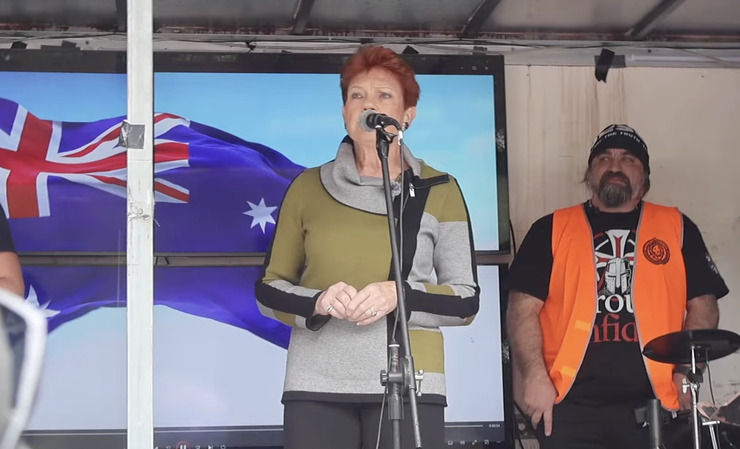
It's that after thirty years of controversy, political attacks, legal battles, imprisonment, electoral defeats and endless predictions of her demise, she is still standing at the microphone.
Still talking.
Still arguing.
Still making people uncomfortable.
In modern politics, that may be the most subversive thing of all.
And Remember:
Trust no Single Source
Trust Your Gut
and Stay Curious
Lee Robbins
For media enquiries, please contact:
UK - 020 3404 2295
USA - 0650 702 7445
AUS - 02 9072 9499
Help Support Lee Robbins and the rest of our Authors by visiting the store to get your copy of the latest Anonymous Author Novel or Anything Anonymous.


Comments