The Sky Was Classified: Washington Is Releasing Its UFO Files While New Mexico Is Still Waiting to Hear What Came Down
The latest UFO files revive an old American promise that somebody in Washington can tell us what crossed the sky. In New Mexico, people spent eighty years waiting for their government to tell them what came down.
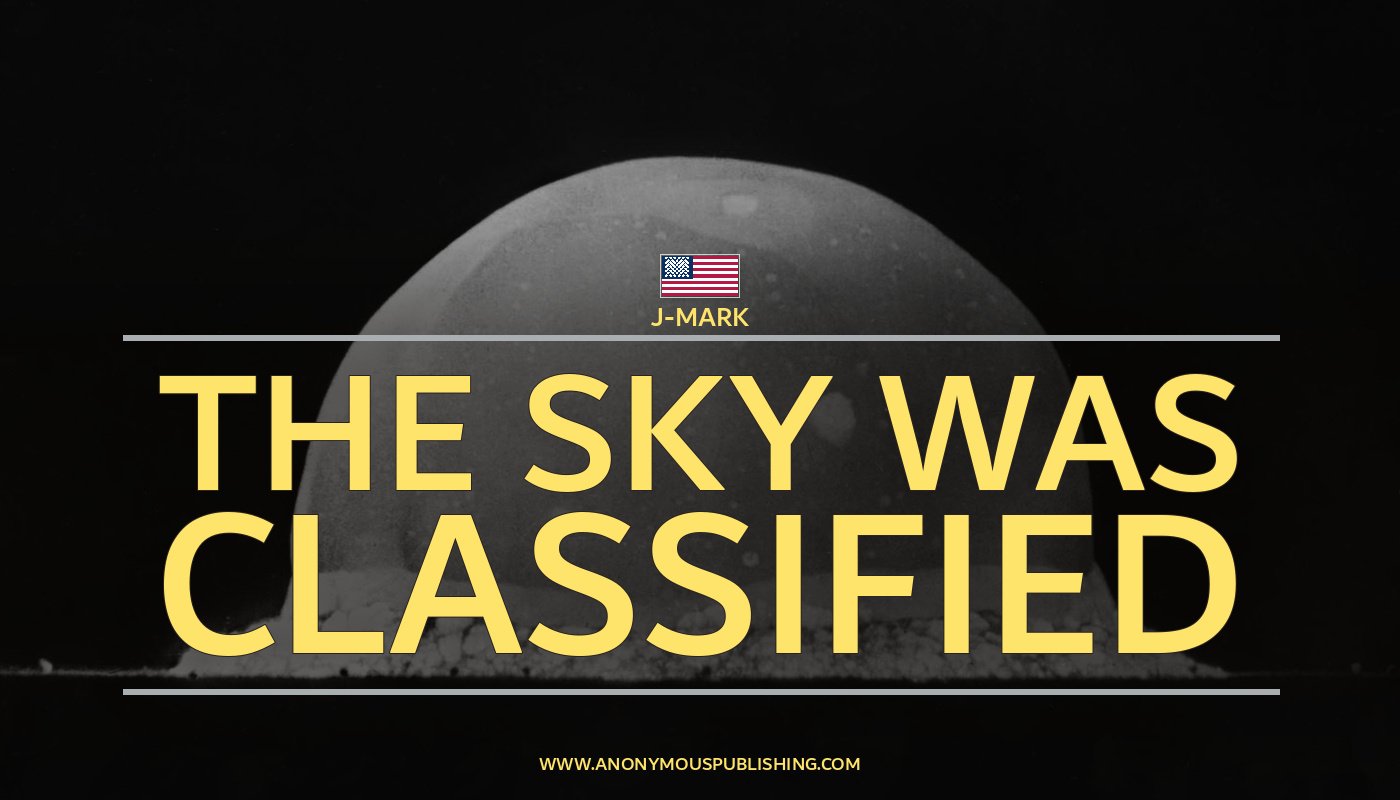
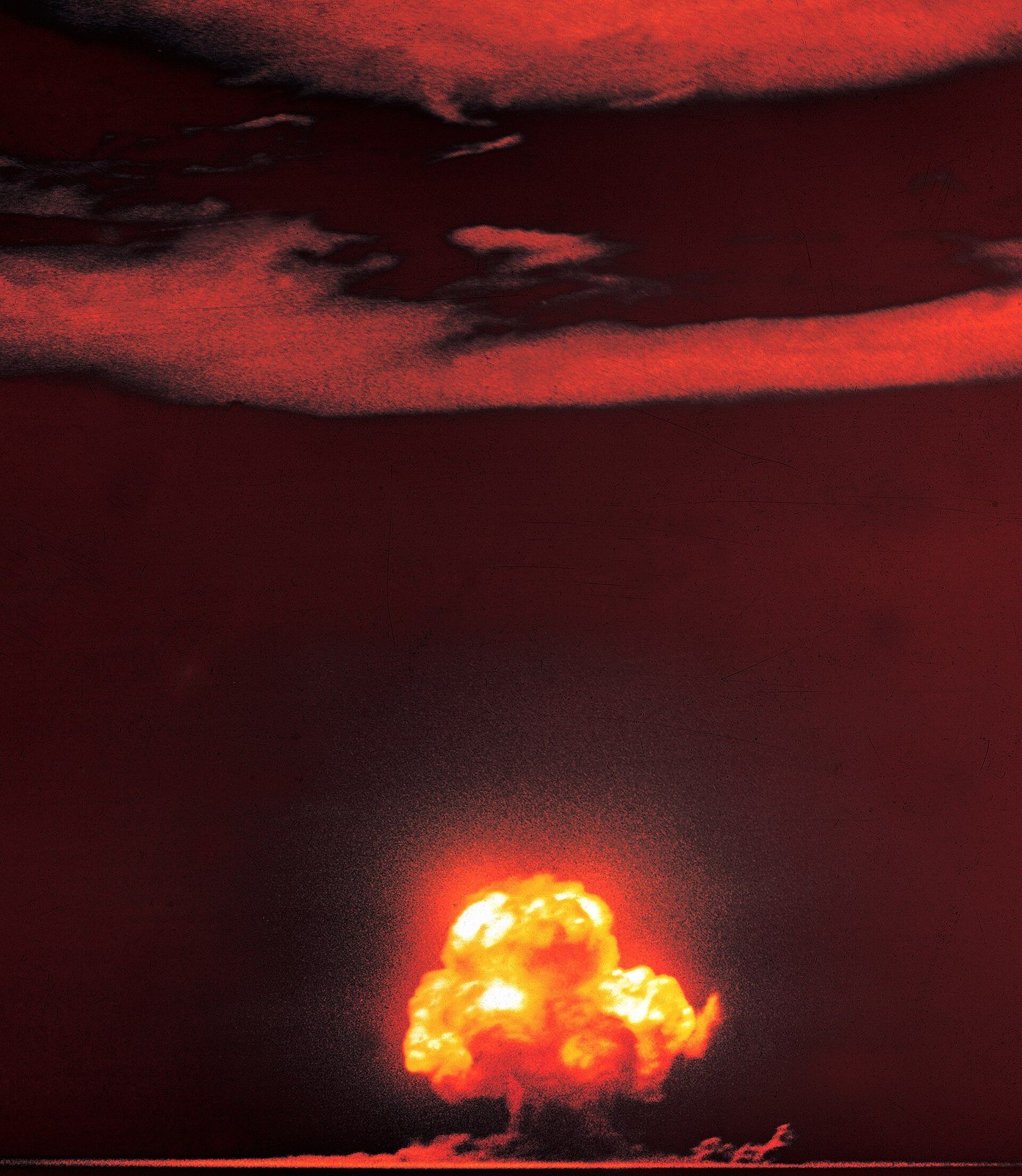
At about half past five on the morning of July 16, 1945, the United States set off the world's first atomic explosion in the New Mexico desert. By the time people began calling their newspapers, the government had a story ready. An ammunition magazine had blown up. No one had been hurt. The story had been prepared in advance by William L. Laurence, a New York Times science reporter working for the Manhattan Project. He had drafted several versions so the military could choose one to fit whatever the public saw. The flash over the Jornada del Muerto had been visible well beyond the test range. The explanation could still be made to fit inside a newspaper column.
Eighty-one years later, the United States began releasing another set of government records about things people had seen in the sky. The first batch under President Donald Trump's disclosure directive went online May 8, 2026; a seventh followed on October 23. Somewhere in the sixth batch, released September 18, among papers about propulsion and theoretical physics, is a 2010 Defense Intelligence Agency reference document called Anomalous Acute and Subacute Field Effects on Human Biological Tissues. The title sounds as if someone worked very hard to keep the word people out of it. Inside are three people who reportedly became ill after an encounter the author describes as aerospace-related. Their skin reddened. Some lost hair.
I kept returning to that file because of a question it leaves hanging. Suppose the people were sick, and suppose they told the truth about what they remembered. What would it take to prove that the thing they saw had made them sick? The DIA paper gives a reader reasons to ask that question. Its release does little to answer it.
New Mexico offers a case in which the source of the exposure is known down to the morning, the tower and the men who ordered the test. Even there, scientists trying to determine who may have been harmed had to reconstruct what children had for breakfast in 1945.
What came home with the milk
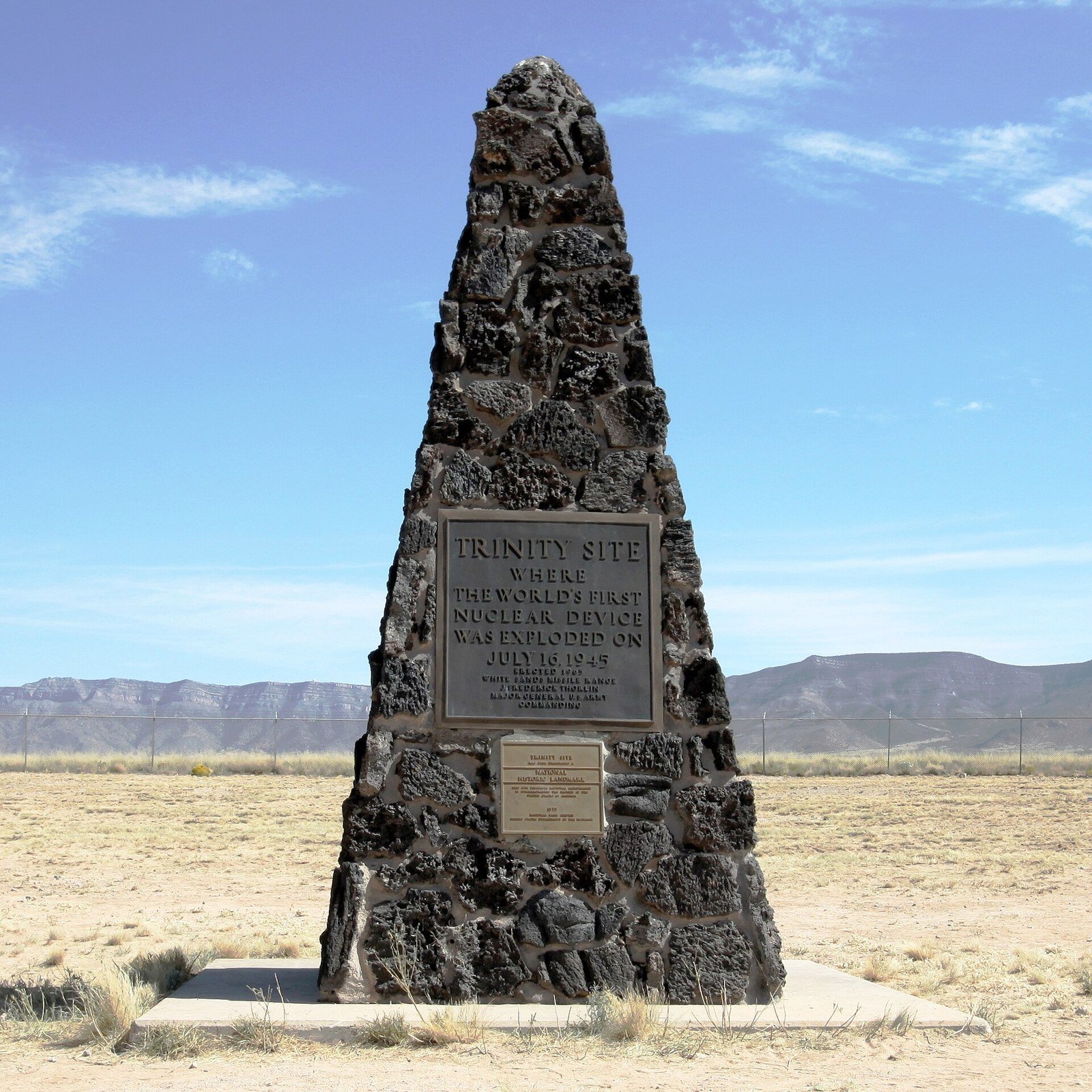
The Trinity device sat atop a hundred-foot steel tower, close enough to the ground for the fireball to take up material from the desert, some of which fused into the green glass we now call trinitite. Other material went up with the cloud and traveled. People living nearby received no advance warning. The National Park Service's account says officials eventually decided against evacuation, in part because it might arouse suspicion or cause panic. A family whose roof collected rainwater had no way to weigh those considerations for itself.
To see why a radiation map can tell only part of that story, start with the cow. Fallout settles on pasture. A cow eats the grass. Radioactive iodine can pass into the milk, and a child who drinks it can absorb some of that iodine in the thyroid. The bomb went off once. Exposure could recur at the kitchen table.
When National Cancer Institute researchers reconstructed those exposures, they worked from historical radiation surveys, census geography and interviews about the diets of New Mexicans in the mid-1940s. Their 2020 study estimated that among roughly 581,000 potentially exposed residents, Trinity fallout could account for 210 to 460 excess cases of solid cancer from 1945 through 2034, plus 80 to 530 additional thyroid cancers. In the five counties with the greatest fallout, the model estimated that 17 to 58 percent of thyroid cancers could be attributable to Trinity. They are also very different from declaring that nobody was hurt.
Tina Cordova, who grew up in Tularosa, began organizing with Fred Tyler in 2005. Cordova has described herself as the fourth generation of her family to develop cancer since 1945. By then the government could tell you where the device's core had been assembled. What happened to the people in the basin still had to be reconstructed in part from what they could tell one another.
In July 2025, Congress reauthorized and expanded the Radiation Exposure Compensation Act, and Trump signed the legislation that included it. The expansion brought New Mexico into the program's downwinder coverage, with a one-time payment of $100,000 for those who qualify. It took eighty years.
The balloon and the airplane
Two years after Trinity, the government had another explanation to offer New Mexico. On July 8, 1947, the FBI's Dallas office sent headquarters a teletype about debris recovered near Roswell, relaying that it resembled a high-altitude weather balloon and radar reflector. The Air Force's 1994 investigation concluded that the debris was most likely from Project Mogul, a classified effort that used high-altitude balloons to listen for Soviet nuclear tests. A balloon was a plausible explanation for what had fallen. Calling it a weather balloon also kept the purpose of the equipment out of the story.
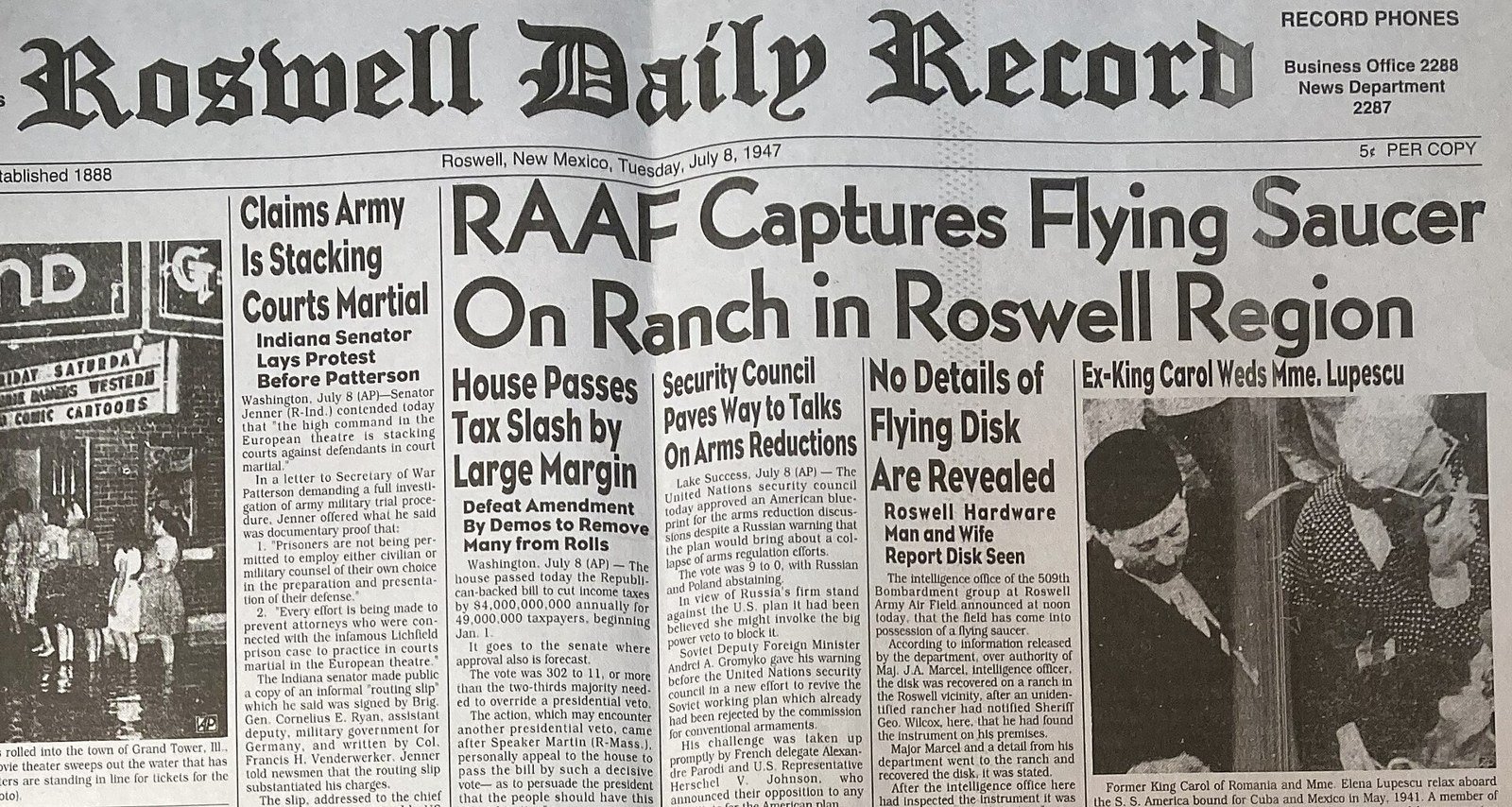
Roswell has stayed alive in part because people are right about one thing near the center of the story. The military had a reason to conceal what it was doing. The mistake is feeling that once deception has been established, the most extraordinary explanation gets to inherit the rest of the evidence.
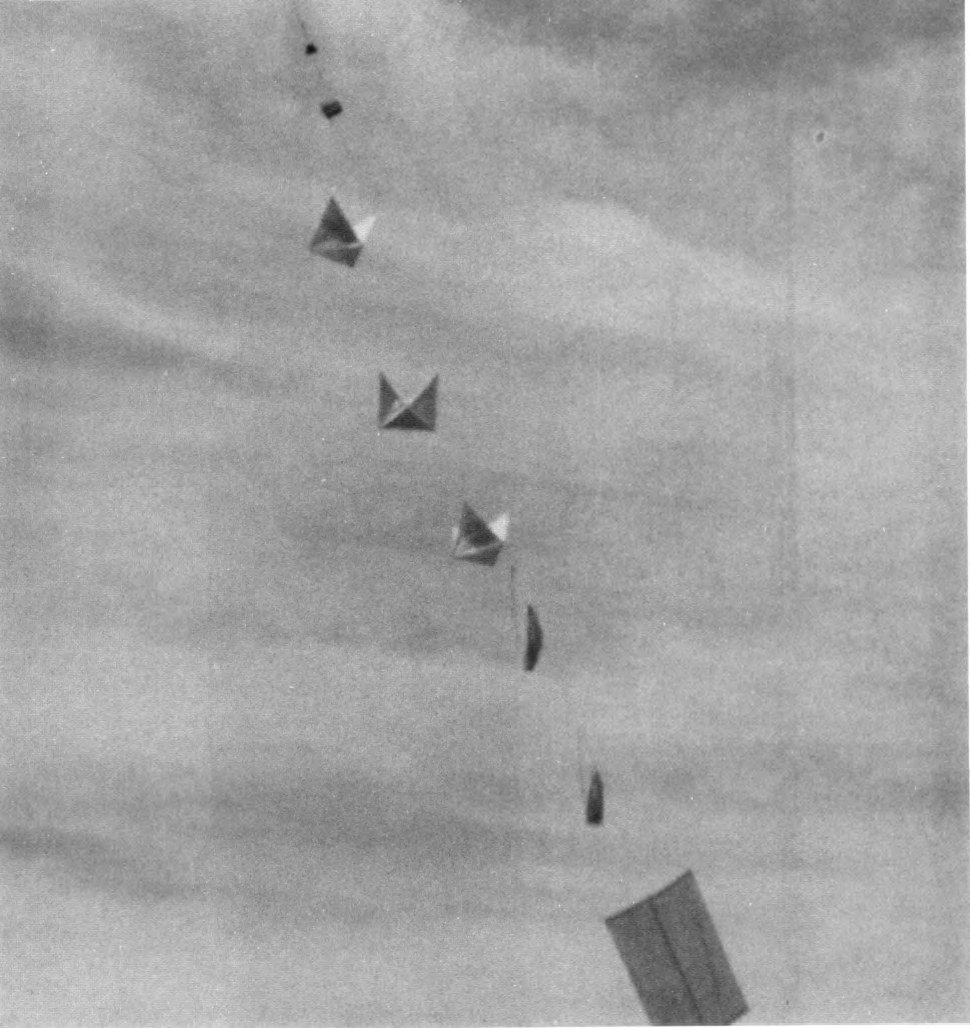
The CIA and Lockheed began testing the U-2 in Nevada in 1955. Commercial crews flying between 10,000 and 20,000 feet could look up at dusk and see sunlight still striking an aircraft above 60,000 feet. A pilot who reported it because he knew his airspace was right to call it in, and may never have been told what he saw. CIA histories later attributed more than half of UFO reports from the late 1950s through much of the 1960s to U-2 and related reconnaissance flights. The National Archives records 12,618 reports in the Air Force's investigation era and 701 that remained unidentified.
What the contractor was paid to imagine
The September 2026 release contains paperwork from the Advanced Aerospace Weapon System Applications Program, usually called AAWSAP. The Defense Intelligence Agency wanted contractors to think about aerospace threats out to 2050. There are studies of warp drives, wormholes and invisibility. Read the program's stated aim and a different picture emerges: an intelligence agency paying people to consider breakthroughs that might one day make familiar technology obsolete.
AAWSAP also has a bureaucratic descendant with a name so good that a novelist would probably change it. KONA BLUE was proposed to the Department of Homeland Security after the DIA effort ended. According to the Pentagon's All-domain Anomaly Resolution Office, or AARO, interviewees later described it as a compartment protecting real recoveries. The office traced the name to the actual paperwork and found a prospective special access program that never received final approval, money or materials. Years later, the existence of the proposal could be offered as evidence that the recoveries were real.
The strongest public allegations of a retrieval operation still tend to lead back to testimony. In July 2023, former intelligence officer David Grusch told Congress that people he interviewed had informed him of a longstanding crash-retrieval and reverse-engineering program. AARO's historical review found no verifiable evidence for a recovered-craft program. Who gave Grusch his information, and what did those people have access to? Those are fair questions, and Congress has every reason to keep asking them.
A president nobody would believe
By November 2026, Trump had both a record of authorizing releases and a record of extraordinary unpopularity. His first-term job approval averaged 41.1 percent, the lowest first-term average in Gallup's historical series. Reuters and Ipsos put him at 32 percent in their November 13–16 survey. A president can order declassification and still remain dependent on what agencies locate, review and bring forward. None of that is verified evidence that he is about to disclose a hidden revelation about nonhuman life.
And yet two things set in motion by this president sit uncomfortably close together. The government he leads is releasing accounts of unexplained events in the sky while administering compensation for injuries associated with a sky the government once insisted was safe. A person on a lunch break can download a file about exotic propulsion in seconds. A family filing a downwinder claim may have to prove where somebody lived eighty years ago. The UFO viewer gets to begin with the government's records. The family has to bring records of its own.
What follows is fiction
Suppose Trump is outside the small circle that has kept a particular secret, and the circle's calculation has always been that even if a president brings it into the open, the public will judge the claim by what it thinks of the man. In this version, that is the purpose his unpopularity serves. Nobody has had to put it there.
The document, in this imagining, is a routing sheet for a shipment from New Mexico. There is a date, an origin, a destination and a description long since replaced by a black rectangle. A carbon copy is attached. In the space where a clerk was meant to list the individuals responsible for receiving the contents, someone typed several names. They belong to children. One name is crossed out so lightly it looks as though the clerk expected somebody to read it.
A week before the upload, a records technician asks for the box that contains the school register. The ages match. Two of the names even have the same misspellings. The crossed-out name belongs to a little girl whose mother wrote to the school asking why her daughter had been marked absent on a day she had gone to class. On the carbon from the government box, next to the little girl's name, the date of receipt is July 15, 1945.
Near the bottom of the correspondence box, folded to the size of an index card, the technician finds a photograph from the little girl's classroom. She turns it over because somebody has written something on the back.
The photograph was dated July 15, 1945, and on the back, in a child's handwriting, someone had written, Tomorrow they tell us it was ammunition.
And Remember:
Trust no Single Source
Trust Your Gut
and Stay Curious
J-Mark
For media enquiries, please contact:
UK - 020 3404 2295
USA - 0650 702 7445
AUS - 02 9072 9499
Help Support J-Mark and the rest of our Authors by visiting the store to get your copy of the latest Anonymous Author Novel or Anything Anonymous.