
From Ambient to Symphony: Decoding Aphex Twin's Legacy with Classical Masters
J-Mark compares Aphex Twin's albums with Beethoven, Mozart and Tchaikovsky: disruption, texture, emotion and legacy, from ambient electronica to the symphony.

Whispers of a digital maverick, a phantom in the matrix of sound—this is Aphex Twin, the enigmatic figure whose electronic symphonies have redefined the boundaries of music.
Like a shapeshifter in the realm of beats and bytes, Richard D. James, known to the world as Aphex Twin, dances in the shadows of the electronic music scene, his creations a complex web of auditory intrigue.
His influence, as pervasive as it is profound, marks a seismic shift in the landscape of sound, a revolution with every note.
Meanwhile, in the echoes of time-worn concert halls, the spirits of Beethoven, Mozart, and Tchaikovsky linger.
These classical maestros, each a titan in their era, carved melodies and harmonies into the very soul of humanity.
Their music, a tempest of emotion and complexity, set the stage for centuries of musical exploration.
Beethoven’s fierce determination, Mozart’s celestial compositions, and Tchaikovsky’s passionate narratives laid the cornerstone of what we know as classical music.
Here we stand, at the crossroads of eras and genres, poised to embark on a journey of comparison and discovery.
This is not just a mere juxtaposition of styles; it’s an exploration into the heart of musical innovation.
How does the frenetic, pioneering spirit of Aphex Twin’s electronic music converse with the grandiose, emotive power of classical legends?
This question invites us into a realm where time, genre, and convention blur, leaving us with nothing but the raw essence of musical genius.
In this odyssey of sound, we’ll navigate through the labyrinthine intricacies of Aphex Twin’s discography, tracing the threads that link his avant-garde electronica to the timeless masterpieces of Beethoven, Mozart, and Tchaikovsky.
It’s a journey through the psyche of the revolutionary, the rebel, and the visionary.
As we delve into this musical tapestry, we uncover the hidden connections, the whispered similarities, and the bold contrasts that define and defy the world of music as we know it.
This exploration is not for the faint of heart.
It demands an open mind and an eager ear, ready to traverse the unknown and embrace the unexpected.
Prepare to dive deep into a world where melodies mingle with machine, and tradition tangles with technology.
Welcome to the enigmatic, exhilarating universe of Aphex Twin and the classical giants – a symphony of the past, present, and the profoundly mysterious.
Unveiling the Mystery: Aphex Twin’s Musical Journey

The odyssey of Aphex Twin, a mosaic of sound and fury, is a journey through the uncharted territories of electronic music.
Each album, a chapter in this saga, reveals layers of an enigmatic genius, weaving a narrative that defies the conventional and embraces the extraordinary.
“Selected Ambient Works 85–92”: Dawn of a New Era
The genesis, “Selected Ambient Works 85–92,” emerges not with a bang but with a pulsating whisper.
It’s a dive into the abyss of ambient soundscapes, where each track navigates through unexplored sonic realms.
This album paints a dreamscape, ethereal yet grounded, introducing the world to a new kind of prophet in electronic music.
It’s here that Aphex Twin begins to sketch the outline of his legacy, with beats that resonate like ripples across a still pond.
“Selected Ambient Works Volume II”: Painting with Sound
As we drift into the realm of “Selected Ambient Works Volume II,” the narrative deepens.
Here, Aphex Twin abandons the traditional structure, opting instead for a tapestry of ambient pieces that defy rhythm and melody as we know them.
This album is an enigma wrapped in a mystery – a collection of sound paintings, each evoking an emotion, a memory, a fragment of a dream.
It’s a journey into the subconscious, where music isn’t heard but felt, like a ghostly presence in the room.
“…I Care Because You Do”: The Emergence of Complexity
With “…I Care Because You Do,” Aphex Twin plunges into more complex, textured waters.
This album marks a shift, intertwining haunting melodies with abrasive beats, creating a sense of dissonance that both unsettles and mesmerizes.
It’s a reflection of an artist in flux, exploring the depths of his own creativity, pushing boundaries with a relentless, almost manic energy.
“Richard D. James Album”: A Personal Revolution
The “Richard D. James Album” is where the persona and the person meet.
This album feels intensely personal, a chaotic blend of frenetic beats and haunting melodies that seem to echo James’ own inner turmoil and brilliance.
It’s a rapid-fire assault on the senses, a whirlwind of emotion and innovation that leaves the listener breathless and bewildered.
“Drukqs”: A Symphony of Contradictions
“Drukqs” stands as a testament to contradiction.
It’s a complex, sometimes jarring mix of delicate piano pieces and aggressive electronic compositions.
This album feels like a battleground where classical sensibilities clash with futuristic chaos, resulting in a fusion that is both jarring and harmonious.
Aphex Twin, in this enigmatic offering, challenges not just his audience, but himself.
“Syro”: The Return
After a hiatus, “Syro” emerges as a triumphant return, a nod to the past while firmly planting its feet in the present.
This album synthesizes elements from Aphex Twin’s entire career, creating a cohesive, mature sound.
It’s a reflective journey, one that acknowledges the path walked while paving new roads to be traversed.
Each album in Aphex Twin’s discography is a piece of a larger puzzle, a fragment of a mind that refuses to be categorized or tamed.
This musical journey is not just a chronicle of albums; it’s a voyage into the heart of creativity, where rules are rewritten and emotions are unbound.
As we delve deeper into this labyrinth of sound, we find not just music, but a reflection of the human experience – raw, unfiltered, and utterly captivating.
The Classical Connection: Beethoven, Mozart, and Tchaikovsky

The tapestry of Aphex Twin’s sound finds its echoes in the hallowed halls of classical music.
Beethoven, Mozart, and Tchaikovsky - each a titan in their own right, wielded the quill of genius to etch their voices into the annals of time.
Their influence, a subtle undercurrent, ripples through Aphex Twin’s avant-garde creations.
Beethoven: The Stormbringer
Ludwig van Beethoven, the maverick maestro, known for his tempestuous symphonies and profound deafness, carved a path of raw emotion and unbridled passion in music.
His compositions, like thunderous waves crashing against the cliffs of convention, redefined the boundaries of musical expression.
In Beethoven’s “Symphony No. 5,” we find the essence of conflict and triumph - a motif that resonates deeply with Aphex Twin’s own tumultuous sounds.
The bold, unapologetic disruptions in Beethoven’s work mirror Aphex Twin’s penchant for shattering musical norms, forging a kinship across centuries.
Mozart: The Weaver of Dreams
Wolfgang Amadeus Mozart, the child prodigy turned virtuoso, spun melodies so intricate and pure they seemed to transcend the earthly realm.
His music, characterized by its clarity, elegance, and balance, speaks of a world where beauty reigns supreme.
In albums like “Selected Ambient Works Volume II,” one can sense the spirit of Mozart - the delicate touch, the nuanced approach to composition, the dreamlike quality that whispers of otherworldly realms.
Aphex Twin, in his ambient explorations, channels a Mozartian finesse, crafting soundscapes that float between consciousness and oblivion.
Tchaikovsky: The Poet of the Orchestra
Pyotr Ilyich Tchaikovsky, a maestro of emotion, wove tales of love, despair, and redemption into his compositions.
His ballets, like “Swan Lake” and “The Nutcracker,” are masterpieces of storytelling through music, each note a brushstroke in a grandiose painting of sound.
Tchaikovsky’s ability to evoke vivid imagery and deep emotional responses finds a parallel in Aphex Twin’s more narrative-driven pieces.
In albums like the “Richard D. James Album,” one can sense Tchaikovsky’s influence - the dramatic shifts, the poignant melodies, the orchestration of aural drama.
The dialogue between Aphex Twin’s electronic innovations and the classical mastery of Beethoven, Mozart, and Tchaikovsky is a testament to the timeless nature of true artistic expression.
It transcends the confines of genre and era, speaking to a universal human experience.
As we journey through Aphex Twin’s discography, echoes of these classical legends resonate, revealing a profound connection between the revolutionary and the classical, the modern and the timeless, the electronic and the symphonic.
Album by Album: A Deep Dive

Delving into the labyrinth of Aphex Twin’s discography, we uncover a symphonic narrative, a story told through the lens of electronic innovation.
Each album, a mosaic of sound, finds its counterpart in the masterworks of Beethoven, Mozart, and Tchaikovsky.
This comparative journey is not just about juxtaposition but about discovering the shared soul of musical genius.
“Selected Ambient Works 85–92” vs. Beethoven’s “Moonlight Sonata”
In the shadowy realms of “Selected Ambient Works 85–92,” we find a kindred spirit to Beethoven’s “Moonlight Sonata.”
Both works, steeped in mood and atmosphere, evoke a sense of introspection.
Beethoven’s piano, with its haunting melody, mirrors Aphex Twin’s ambient textures - each note and beat a step deeper into the psyche.
The album’s exploratory nature, its willingness to embrace silence as much as sound, channels Beethoven’s bold use of pacing and space, creating an emotional resonance that is as profound as it is unspoken.
“Richard D. James Album” vs. Mozart’s “Requiem”
Aphex Twin’s “Richard D. James Album” resonates with the intricate complexities of Mozart’s “Requiem.”
Just as Mozart’s composition weaves through movements of light and darkness, so too does Aphex Twin navigate a spectrum of sound, from serene to chaotic.
There’s a meticulous craftsmanship in both works, a mastery of form and chaos.
The frenetic beats and lush melodies of Aphex Twin’s album dance with the same precision and unpredictability found in Mozart’s choral and orchestral arrangements, each creating a tapestry of sound that is both intricate and immersive.
“Drukqs” vs. Tchaikovsky’s “Swan Lake”
In “Drukqs,” Aphex Twin engages in a ballet of sound reminiscent of Tchaikovsky’s “Swan Lake.”
This album is a narrative of contrasts, a blend of serene piano compositions and aggressive electronic tracks that echo the dual nature of Tchaikovsky’s famous ballet.
The juxtaposition of gentle piano melodies against the backdrop of complex, sometimes jarring electronic sounds mirrors the interplay of “Swan Lake’s” themes of beauty and tragedy.
Both Aphex Twin and Tchaikovsky master the art of storytelling through music, inviting the listener into a world where every note holds a piece of the narrative.
“Syro” vs. Beethoven’s “Symphony No. 9”
Aphex Twin’s “Syro,” a harmonious amalgamation of his sonic explorations, finds its classical counterpart in Beethoven’s “Symphony No. 9.”
Both works represent a culmination of their respective artists’ journeys, weaving together threads from their past works into a cohesive, forward-thinking masterpiece.
Just as Beethoven’s symphony transcends the traditional structure to include a choral finale, “Syro” transcends genre boundaries, blending elements of ambient, techno, and classical into a seamless whole.
The album echoes the symphony’s progressive spirit, its ability to embrace and redefine the future of music.
Through this album-by-album exploration, the tapestry of Aphex Twin’s work unravels, revealing a profound connection with the classical masters.
It’s a dance across time and genre, where electronic and classical music meet in a celebration of innovation, emotion, and unbridled creativity.
Each comparison not only highlights the unique genius of Aphex Twin but also rekindles an appreciation for the timeless artistry of Beethoven, Mozart, and Tchaikovsky.
In this deep dive, we find more than just parallels; we discover the universal language of music, transcending the boundaries of era and style.
The Art of Disruption: Breaking Musical Boundaries

The realm of music, ever-evolving and boundless, finds its most audacious explorers in the likes of Aphex Twin and the classical giants - Beethoven, Mozart, and Tchaikovsky.
Their legacy is not just one of creation but of disruption, tearing down the established norms and ushering in waves of innovation.
Aphex Twin: A Digital Revolutionary
Aphex Twin, armed with synthesizers and samplers, embarked on a journey that redefined electronic music.
His approach was not just about using new tools but about creating new worlds.
From the unsettling, otherworldly sounds of “Selected Ambient Works Volume II” to the frenzied, complex rhythms of “Drukqs,” Aphex Twin’s music defies categorization.
He manipulates sound, warping and weaving it into something alien yet familiar.
This disruption is not for shock value; it’s a deliberate exploration of what music can be, pushing the boundaries of tempo, rhythm, and harmony.
Beethoven: The Rebellious Romantic
Beethoven, the tempestuous genius, tore through the conventions of his time.
His radical departure from the formal strictures of classical music is epitomized in compositions like the “Eroica” Symphony.
Here, he expanded the form, introduced dissonance, and explored emotional depths previously uncharted in symphonic music.
Beethoven’s willingness to break from tradition, to embrace his own narrative style, echoes in Aphex Twin’s rebellious spirit.
Both artists share a disdain for the predictable, a hunger to explore the unexplored.
Mozart: The Subtle Subversive
Mozart, often celebrated for his melodic perfection, was a disruptor in his own right.
His opera “Don Giovanni” challenged societal and musical norms, blending comedy and tragedy, the sacred and the profane, in ways that shocked his contemporaries.
Mozart’s music, with its unexpected harmonies and structural innovations, paved the way for composers like Aphex Twin to question and experiment.
In Aphex Twin’s ambient works, we find Mozart’s legacy – a delicate subversion of the expected, a grace in the unconventional.
Tchaikovsky: The Emotional Extremist
Tchaikovsky, the poet of deep feeling, pushed the emotional boundaries of music.
His “Pathétique” Symphony is a journey through the landscape of the human heart, unafraid of its own intensity.
This emotional bravery, this willingness to lay bare the soul, finds resonance in Aphex Twin’s more introspective pieces.
Tchaikovsky’s lush, dramatic orchestrations, his fearless exploration of melancholy and ecstasy, are mirrored in Aphex Twin’s layered, textural soundscapes.
Both artists use music not just to express but to explore the depths of emotion.
In the art of disruption, Aphex Twin and these classical maestros share a common thread – a relentless pursuit of the new, the untried, the unheard.
Their music is a testament to the power of breaking rules, challenging norms, and redefining the very concept of music.
This analysis reveals not just a series of disruptive techniques but a shared philosophy of innovation, a relentless quest to push the sonic envelope and expand the horizons of musical expression.
The Sonic Tapestry: Textural Analysis

The realm of sound is a canvas, and both Aphex Twin and the classical maestros are its master painters.
Their music, a rich tapestry woven with the threads of sound, rhythm, and melody, invites listeners into immersive, multi-sensory worlds.
This textural analysis delves into the intricacies of their sonic landscapes, exploring how these diverse musicians use their palettes to create profound auditory experiences.
Aphex Twin: Architect of Atmosphere
Aphex Twin’s genius lies in his ability to construct intricate soundscapes.
His use of texture is not merely a feature of his music; it is the foundation.
In albums like “Selected Ambient Works Volume II,” he crafts a sonic environment that envelops the listener.
Each track layers sounds with a precision that feels both meticulous and organic, creating a tapestry that is as complex as it is captivating.
His rhythms, often irregular and syncopated, add a dimension of unpredictability, while his melodies, when they surface, cut through the texture like beams of light through a dense fog.
Beethoven: The Dynamic Sculptor
Beethoven’s approach to texture was revolutionary.
He sculpted sound with a dynamic range that was unheard of in his time.
His symphonies, particularly the “Ninth Symphony,” are studies in contrast: from the delicate pianissimo to the thunderous fortissimo.
Beethoven’s use of rhythm was equally groundbreaking, as he employed rhythmic motifs not just as a foundation but as a central theme of his compositions, much like Aphex Twin’s rhythmic complexities.
The way Beethoven weaves melody through these dynamic textures creates a sense of journey and exploration, akin to the immersive experiences crafted by Aphex Twin.
Mozart: The Master of Clarity
Mozart’s textural brilliance lies in his clarity and balance.
Each instrument in his compositions, like in “The Magic Flute,” plays a crucial role in the overall texture.
His melodies are clear and articulate, floating gracefully atop the harmonious interplay of the orchestra.
This clarity, this precision, is mirrored in Aphex Twin’s more ambient and melodic pieces, where every sound is carefully placed, every rhythm calculated to contribute to the larger sonic picture.
Tchaikovsky: The Painter of Emotions
Tchaikovsky, renowned for his ballets, was a master at painting emotions with sound.
His compositions, such as “Swan Lake,” are rich tapestries of melody and harmony, each layer of sound adding depth and color to the emotional narrative.
Tchaikovsky’s use of the orchestra to create texture is reminiscent of Aphex Twin’s layering of electronic sounds - both create lush, enveloping experiences that transport the listener to other realms.
In this textural analysis, the link between Aphex Twin’s electronic landscapes and the classical compositions of Beethoven, Mozart, and Tchaikovsky becomes clear.
Each artist uses sound, rhythm, and melody to weave intricate sonic tapestries, inviting listeners into worlds crafted from pure imagination.
Whether through the digital alchemy of Aphex Twin or the orchestral wizardry of the classical greats, these textures speak a universal language, transcending time and genre to create truly immersive experiences.
The Emotional Landscape: From Euphoria to Melancholia

The music of Aphex Twin and the classical titans - Beethoven, Mozart, and Tchaikovsky - is not just a journey through sound but an odyssey of emotions.
Their compositions traverse the vast landscape of human feeling, from the peaks of joy to the depths of sorrow, resonating with listeners on a profoundly psychological level.
Aphex Twin: The Conjurer of Emotions
Aphex Twin, a modern-day sonic sorcerer, wields the power to evoke complex emotions through his electronic compositions.
Albums like “Selected Ambient Works 85-92” and “Richard D. James Album” are emotional chameleons, shifting from serene, contemplative ambience to unsettling, adrenaline-fueled beats.
His music, often devoid of lyrics, speaks directly to the subconscious, tapping into feelings that words cannot express.
This ability to elicit a spectrum of emotional responses, often within a single track, mirrors the depth and diversity found in classical music.
Beethoven: The Titan of Passion
Beethoven’s music is a tempest of emotion.
His compositions, like the iconic “Symphony No. 5,” are renowned for their ability to capture the full range of human feeling, from triumph and joy to despair and rage.
The emotional power of Beethoven’s music lies in its dramatic contrasts and intense dynamics, mirroring the highs and lows of the human experience.
This intensity, this raw expression of feeling, echoes in Aphex Twin’s more dramatic and disruptive pieces, where sound becomes a conduit for emotional catharsis.
Mozart: The Poet of Serenity
Mozart’s compositions, in contrast, often exude a sense of serene balance and elegance.
His operas and symphonies, such as “The Marriage of Figaro” and “Symphony No. 40,” convey a wide range of emotions, from lighthearted joy to poignant sadness, all within a framework of exquisite musical harmony.
This emotional versatility, the ability to convey complex feelings with subtlety and grace, resonates with the more ambient and melodic aspects of Aphex Twin’s work, where emotion is conveyed not through intensity but through nuance.
Tchaikovsky: The Sculptor of Melancholy
Tchaikovsky is the sculptor of deep, often melancholic emotions.
His ballets and symphonies, like the heart-wrenching “Swan Lake” and the deeply personal “Pathétique” Symphony, delve into themes of love, loss, and longing.
Tchaikovsky’s music speaks directly to the heart, weaving a narrative of emotion that is both universal and intimately personal.
In Aphex Twin’s more introspective tracks, we find a similar emotional depth, a similar ability to evoke a sense of longing and introspection.
The emotional landscapes painted by Aphex Twin and these classical composers are rich and varied.
Their music connects with listeners on a psychological level, offering a sonic mirror to our own inner worlds.
Through their art, we explore the full spectrum of human emotion, from euphoria to melancholia, and in doing so, we come to understand a little more about ourselves.
Legacy and Influence: Shaping Future Sounds

Aphex Twin and the classical maestros – Beethoven, Mozart, and Tchaikovsky – are not just artists; they are architects of the future, their music a foundation upon which new worlds of sound are built.
Their legacies, rich in innovation and emotion, continue to echo through the halls of contemporary music, shaping its evolution and hinting at its future trajectories.
Aphex Twin: The Digital Pioneer
Aphex Twin’s impact on the music scene is as profound as it is pervasive.
His forays into uncharted electronic territories have inspired a generation of musicians, producers, and composers.
The Aphex influence is evident in the experimental sounds of modern electronic music, where boundaries are continuously pushed and genres meld into one another.
His legacy is a testament to the power of innovation, encouraging artists to explore the unknown and embrace the unconventional.
As we look to the future, we can expect Aphex Twin’s influence to persist, driving music further into the realms of digital experimentation and beyond.
Beethoven: The Eternal Revolutionary
Beethoven’s legacy in contemporary music is undeniable.
His approach to composition and his relentless pursuit of emotional expression set the stage for the Romantic era and beyond.
Today, his influence is felt in the dramatic, narrative-driven approaches of film scores and symphonic music, where emotion and story are intertwined.
Beethoven’s spirit, his willingness to break the rules and push the limits, continues to inspire musicians and composers to challenge the status quo, ensuring his impact on music will endure for generations to come.
Mozart: The Master of Melody
Mozart’s legacy lies in his extraordinary ability to craft melodies of timeless beauty and elegance.
His influence permeates the world of pop, jazz, and beyond, where melodic clarity and balance are prized.
Modern composers and songwriters, in their quest for the perfect melody, often turn to Mozart’s works for inspiration.
His legacy in contemporary music is a reminder of the power of a simple, beautiful melody to touch the heart and stir the soul.
Tchaikovsky: The Embodiment of Emotion
Tchaikovsky’s emotional depth and his ability to weave narrative through music continue to influence contemporary composers, particularly in the realms of ballet and film.
His legacy is evident in the emotionally charged soundtracks of modern cinema, where music is an essential vehicle for storytelling.
Tchaikovsky’s influence encourages composers to explore the depths of human emotion, creating soundscapes that resonate with audiences on a deeply personal level.
As we gaze into the future of music, the shadows of these giants loom large.
Their influence, a guiding light in the ever-changing landscape of sound, promises a future where innovation, emotion, and exploration continue to reign supreme.
The legacy of Aphex Twin and the classical maestros is not just a reflection of their past achievements but a blueprint for the sonic explorations yet to come.
In their footsteps, new generations of artists will continue to push boundaries, redefine genres, and explore the uncharted territories of musical expression.
Finale
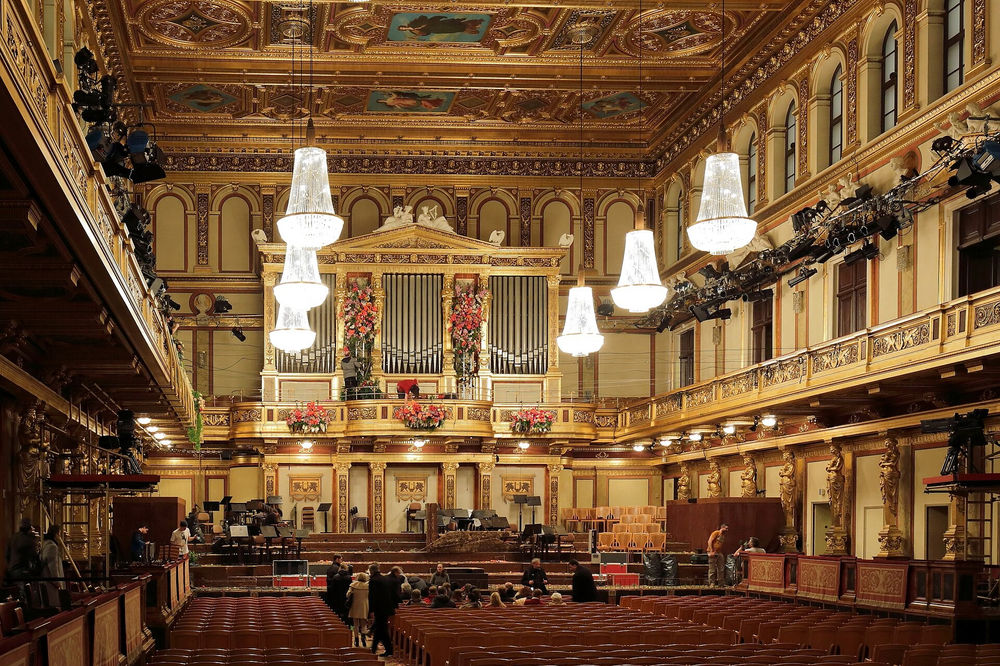
This journey through the sonic realms of Aphex Twin and the classical virtuosos Beethoven, Mozart, and Tchaikovsky, has been a voyage across time and style, a deep dive into the essence of musical innovation and emotional expression.
As we resurface from this odyssey, we carry with us key insights and reflections that transcend the mere analysis of music.
Aphex Twin, a modern-day digital alchemist, and the classical maestros, each a titan in their era, demonstrate the boundless possibilities of music.
Their works, though separated by centuries and genres, share a common thread – the relentless pursuit of new frontiers in sound and the unyielding exploration of the human condition.
Through their compositions, we witness the power of music to not just evoke emotion but to transport us to other worlds, to speak to our innermost selves.
The comparison of these musical pioneers reveals a timeless truth: innovation in music is not confined to a specific era or genre.
It is a universal phenomenon, a constant ebb and flow of creativity and disruption.
Aphex Twin’s electronic soundscapes resonate with the same revolutionary spirit as Beethoven’s symphonies, the same emotional depth as Tchaikovsky’s ballets, and the same melodic genius as Mozart’s operas.
As we look to the future of music, the influence of these artists remains a beacon, guiding the way for new generations of musicians and composers.
Their legacies remind us that the essence of music is in its capacity to evolve, to challenge, to console, and to inspire.
This odyssey, a blend of past and present, classical and electronic, has been more than an exploration of music – it has been a journey into the heart of artistic expression.
In the end, the music of Aphex Twin, intertwined with the timeless works of Beethoven, Mozart, and Tchaikovsky, stands as a testament to the enduring power of sound to shape our experiences, our emotions, and our very understanding of the world.
This journey, this exploration, has been a reminder of the transformative power of music, a power that knows no bounds, no limits, and no end.
And Remember:
Trust no Single Source
Trust Your Gut
and Stay Curious
J-Mark
For media enquiries, please contact:
UK - 020 3404 2295
USA - 0650 702 7445
AUS - 02 9072 9499
theanonymouspublishinghouse@gmail.com
Help Support J-Mark and the rest of our Authors by visiting the store to get your copy of the latest Anonymous Author Novel or Anything Anonymous.
 Visit the store


