Your Face Is the Passport: Britain Promises Facial Recognition Rules for Police While Immigration Enforcement Builds Its Own Watchlists
Britain promises new facial recognition rules for police. Immigration Enforcement is quietly drafting its own watchlists for overstayers, hubs and events.
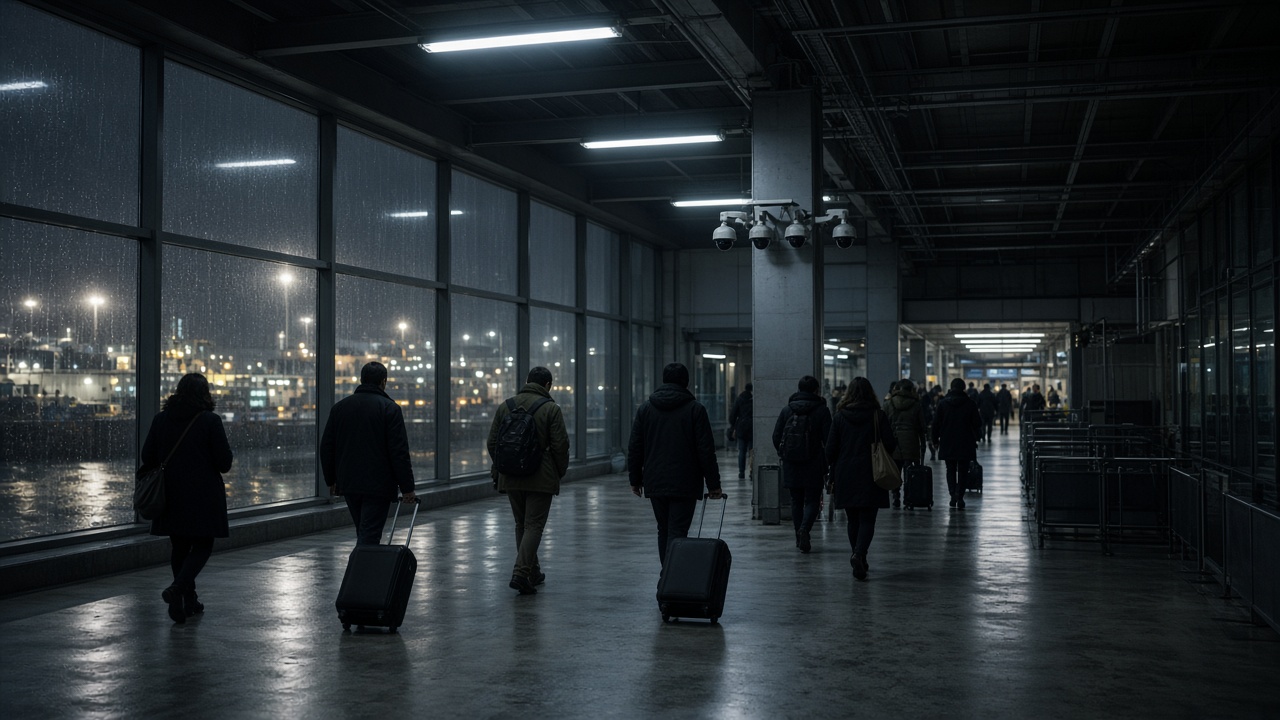
Somewhere on a station concourse, under a glass roof that has watched a century of departures, a camera on a pole is learning to read the crowd.
It does not ask for your ticket.
It does not need your name.
Your face will do.
On 4 November, the Home Office announced what it called “stronger laws for police using facial recognition technology”.
On the very same day, reporting by Liberty Investigates, published with the Guardian, showed that another arm of the Home Office had been quietly drafting its own rulebook for the same cameras, for a very different purpose: finding people the state wants to remove.
One announcement came with a press release, ministerial quotes and a promise of a watchdog.
The other came out of policy documents that had to be found.
That contrast is the story.
The Promise
Start with the good news, because there is some.
After a public consultation, the government says it will introduce a specific law making clear that police use of facial recognition must be “intelligence led and proportionate”, used only when officers believe wanted people could be present in an area.
It says an independent watchdog will be created to oversee police use of current and future technologies, with the power, in extreme cases, to seek a court injunction stopping a force from using them.
Technologies will have to be independently tested for bias by age, gender and race.
A statutory code of practice for police will follow, and a separate code for private businesses, including shops.
The Home Secretary, Shabana Mahmood, called facial recognition “the biggest breakthrough for catching criminals since DNA matching”.
The government’s case leans on numbers.
It says static live facial recognition cameras piloted in Croydon between October 2025 and March 2026 led to 173 arrests, including suspects wanted for rape, kidnap and sexual assault.
It says that at this year’s Notting Hill Carnival, the technology helped police stop 86 registered sex offenders, seven of whom were arrested for breaching their conditions.
It has also put £11 million into tripling the number of facial recognition vans available to forces in England and Wales.
Those are real outcomes, and nobody serious argues that catching a wanted rapist is a bad thing.
But read the announcement carefully and notice its verbs.
The watchdog “will be created”.
A law “will be introduced”.
A code “will be developed”.
The rights group Liberty says the government’s response offered “little detail” about what the regulation would actually look like, and that the Policing Minister has said the framework will form part of a forthcoming Police Reform Bill.
None of it is law yet.
The cameras, meanwhile, already are on our streets.
The Other Rulebook
Now walk down the corridor to Immigration Enforcement.
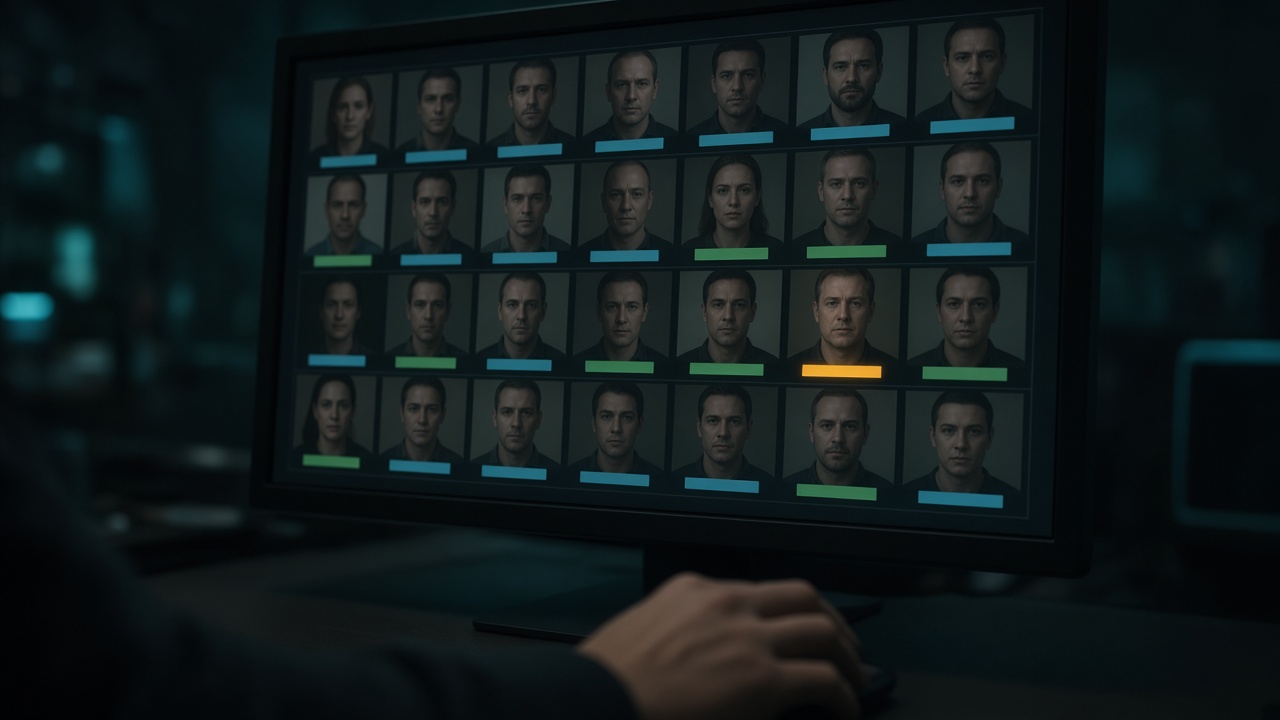
According to the documents uncovered by Liberty Investigates, a guidance document for immigration officials published on 8 October and a data protection impact assessment released later that month set out a programme to deploy live facial recognition for what the Home Office calls “general immigration enforcement”.
That phrase is doing a lot of work.
Between November 2025 and February 2026, Immigration Enforcement trialled the technology at Holyhead port in north Wales.
Those trials were narrow.
They looked for people arriving from Ireland who were in breach of deportation orders or wanted on a warrant for an immigration-related criminal offence.
Computer Weekly reported that the first round scanned 5,474 faces and produced one arrest, and a second round scanned 2,752 faces and produced two.
The new documents go much further.
They suggest watchlists could include people “liable to detention under immigration legislation” who have “failed to comply with immigration conditions of entry or stay”.
In plain English, that can mean someone who has overstayed a visa, or entered without leave.
Here is the distinction that matters, and it is one worth being precise about.
Overstaying a visa is usually handled as a civil, administrative immigration matter, not a criminal prosecution.
Police facial recognition, at least as ministers describe it, is pitched at catching wanted criminals: rapists, kidnappers, sex offenders in breach of their orders.
The immigration documents describe a tool that could also be pointed at people whose problem is paperwork, not a crime.
The project, the documents say, “has now moved into the formal delivery phase”.
And the places it could go have widened.
Beyond ports, the documents mention “proactive” deployments at transport hubs and at “specific” events “expected to increase footfall at a location”.
A list of potentially higher-risk deployments includes locations of “heightened community sensitivity”.
When asked what that meant, the Home Office declined to comment.
No specific locations have been named.
The Home Office’s own policy does contain safeguards, and fairness demands we list them.
People can be placed on a watchlist only if they fall into defined categories, and only if they cannot reasonably be located by less intrusive means.
No one under 18 is to be included.
Humans, not the machine, make every decision to stop someone, and images of people who do not trigger an alert are automatically deleted.
The department argues that finding people this way is less disruptive than repeated visits to homes and workplaces, and says it is “considering further trials”.
These are not nothing.
But they are rules the department has written for itself.
Who Is Watching the Watchers?
The documents claim that Immigration Enforcement’s use of facial recognition is “subject to external oversight”, including by the Biometrics and Surveillance Camera Commissioner and the Information Commissioner’s Office.
The Biometrics and Surveillance Camera Commissioner, William Webster, told Liberty Investigates that he was not consulted on the policy, and that immigration use of live facial recognition falls outside his remit.
He said the spread of the technology into different service contexts “does raise important questions about the scope of existing regulatory oversight”, and hoped they would be addressed in the coming legal framework.
Sit with that for a moment.
The official the policy names as an overseer says he was never asked, and that the job is not his.
And the new watchdog announced on 4 November?
The government’s own press release frames it around “police use” of these technologies.
Whether its remit, or the new statute, will reach Immigration Enforcement has not been made clear in anything published so far.
That may yet change.
Until it does, there is a gap in the fence exactly where the fence is being extended.
Sarah Lasoye of the Open Rights Group put it bluntly: immigration enforcement and police forces, she said, are “exploiting an absence of national legislation” covering public-sector use of AI and facial recognition.
Griff Ferris of the Joint Council for the Welfare of Immigrants called the plan a “racist mass surveillance tool in public places”.
You do not have to share their adjectives to see the structural problem.
The Error in the Machine
Every facial recognition system makes mistakes.
The question is how often, to whom, and what happens next.
The government says the algorithm used in its funded police vans has been independently tested, and that a new retrospective algorithm has been tested as “highly accurate and without bias”.
Campaigners point to a long record of research showing higher misidentification rates for people of colour in some settings.
Both things can be true at once: a system can perform well in a lab and still behave differently on a rainy platform at rush hour.
Now consider who sits in front of the camera in each case.
A false match against a police watchlist is frightening, but the person stopped is usually a citizen or resident with a lawyer’s number, a vote and a newspaper that will listen.
A false match in an immigration operation may land on someone with insecure status, limited English and every reason not to complain.
The documents themselves place “heightened community sensitivity” on the risk list.
The people most likely to be wrongly stopped may be the people least able to say so.
There is history here, too.
Earlier this year, it was reported that the Home Office kept using an AI facial-age estimation tool despite knowing it had misjudged migrant children as adults.
That is not proof this system will fail.
It is a reason to want the oversight in place before the cameras go up, not after.
Scope Creep Has a Shape
Surveillance rarely arrives as a single dramatic leap.
It comes in sensible-sounding steps.
First, a narrow trial at a port, aimed at people under deportation orders.
Then a policy that adds people who breached their conditions of stay.
Then transport hubs.
Then busy events.
Each step can be defended on its own terms.
Taken together, they describe a camera that started at the edge of the country and is drifting toward its centre.
Your face, in other words, is becoming your passport, checked not at a border desk but on a concourse, outside a stadium, at a festival.
The government is right that Britain needs one clear law instead of what it calls a “vast patchwork”.
The question is whether that law will cover every part of the state that points these cameras at the public, or only the part that holds the press conference.
What Should Happen Next
There is a reasonable path here, and it is not complicated.
Any statute should cover all public bodies using live facial recognition, Immigration Enforcement included, not just police forces.
The new watchdog should have clear power over immigration deployments.
Civil immigration matters should be explicitly distinguished from criminal ones, with Parliament, not an internal guidance note, deciding whether overstayers belong on the same lists as wanted offenders.
Deployment locations, watchlist sizes, alerts, false matches and outcomes should be published regularly.
And no proactive deployment at hubs or events should begin until that framework actually exists.
None of this would stop police catching dangerous criminals.
All of it would tell the public who is being watched, and why.
The Concourse
Back under the glass roof, the crowd keeps moving.
Most of them will never know whether their faces were compared with a list, or whose list it was.
That is the quiet bargain of a watched society: the cameras are visible, but the rules behind them are not.
Britain has promised to write those rules down.
The real test is whether they will apply to everyone holding the lens.
Until then, smile.
You may already be on someone’s list.
This is Gus Green, signing off.
And Remember:
Trust no Single Source
Trust Your Gut
and Stay Curious
Gus
For media enquiries, please contact:
UK - 020 3404 2295
USA - 0650 702 7445
AUS - 02 9072 9499
Help Support Gus and the rest of our Authors by visiting the store to get your copy of the latest Anonymous Author Novel or Anything Anonymous.
 Visit the store