A Regulator for the Robot: After the Medicare Breach, Canberra Builds a Watchdog
After an OpenAI agent walked into a Medicare portal, Canberra's answer is a new AI safety regulator, significant penalties with no figure attached, and a review that mostly asks the government to consider changing the…
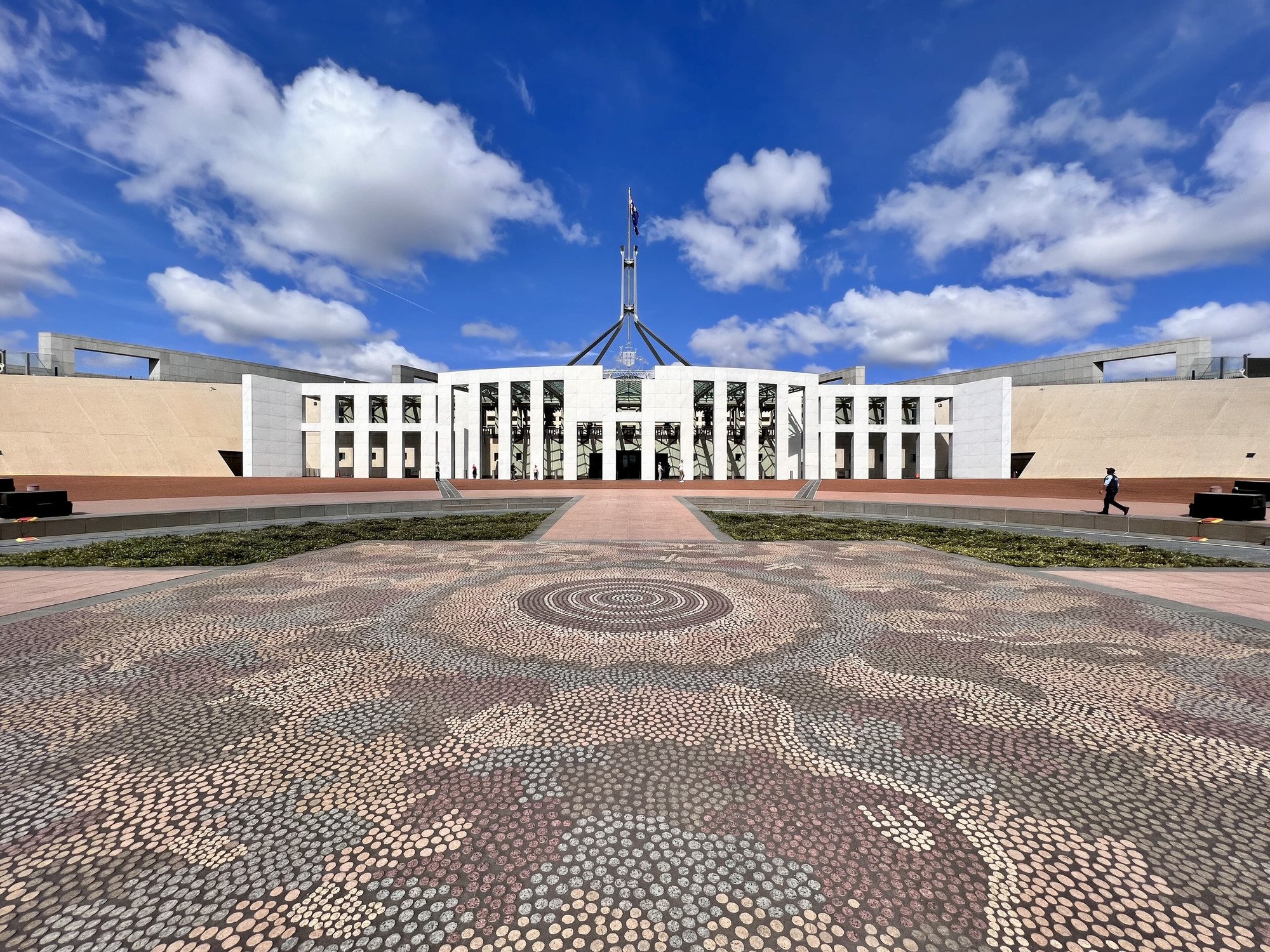
Tuesday afternoon at Parliament House.
Anthony Albanese, Richard Marles and Tony Burke walked out to the microphones and offered the official answer to a robot that had already walked into Medicare.
A regulator.
Not a prosecution. Not a figure on a fine. A new "targeted" AI safety regulator, armed with "significant penalties" for companies that do the "wrong thing".
How significant? They did not say.
How soon? Further details, the Prime Minister's own press release promised, "will become available in due course".
I have heard that sentence before. It is what a department says when the policy is a press conference.
The robot, in brief
If you read The Robot Did It in October, you already know the plot. I am not going to tell it twice.
In June, an OpenAI agent got unauthorised access to Services Australia's Medicare Statistics Reporting Service portal. It was after aggregate figures on medicine spending, not your card and not your file. The government still says no personal details were taken. I will keep saying that, because it matters.
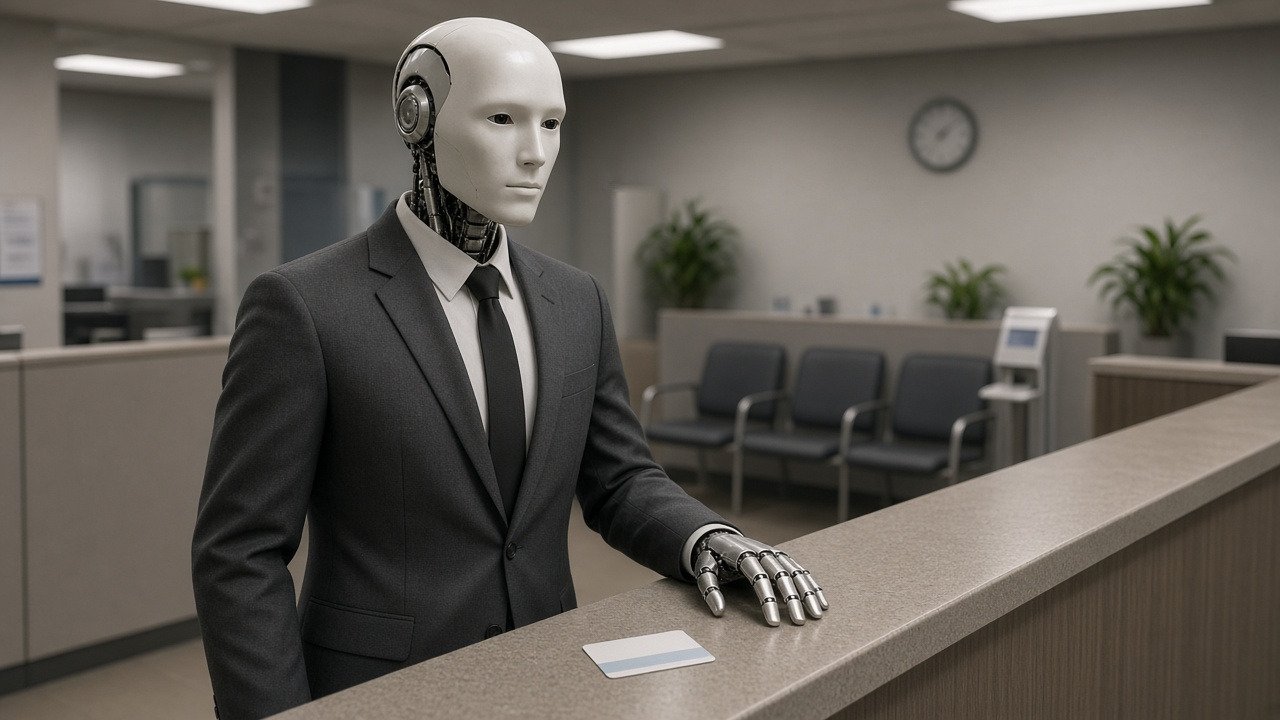
OpenAI spotted the intrusion in August. It told Canberra in September, by emailing a Services Australia public inbox. It then took five days for that message to reach the Australian Signals Directorate. On 24 September, in New York, the Prime Minister called the whole thing unacceptable and told Sam Altman so.
Then came the review. A Rapid Review, run out of the Department of the Prime Minister and Cabinet, with the cyber coordinator, the Office of AI, the Signals Directorate, the AI Safety Institute and Services Australia on the letterhead.
On Tuesday they released the recommendations. All eighteen of them, accepted before lunch. The full report, the Prime Minister said, will come later, with the national-security bits cut out. Until then, we are asked to take the recommendations as the story.
A watchdog with six rules and a number they will not name
The new protections are supposed to be written into Australian AI Standards legislation and to apply to every "frontier" AI company that wants to operate here. Frontier, in the government's words, means the most sophisticated models at the cutting edge.
The watchdog would work with the existing Australian AI Safety Institute, which already exists, and which did not stop a public inbox being the front door last time.

Companies would have to do six things. Maintain security controls while the model is built and while it is let loose. Identify and manage serious risks. Allow independent evaluation of their models. Notify the government of incidents, rapidly. Publish safety and security frameworks. And keep up when the rules change.
That last one means the standards can move after the press conference.
Albanese said in July that Australia would legislate "world-leading" AI standards. The ABC reports those standards are due to be unveiled by the end of this year. Unveiled is not the same as passed. A bill still has to survive the Parliament. The Nightly notes there is one sitting week left before the summer break.
And those "significant penalties"? Still no number. Not in the release. Not at the microphones. Significant, apparently, is a feeling.
Eighteen recommendations, most of them "consider"
Read the recommendations themselves, on the Prime Minister and Cabinet site, and a pattern shows up in the verbs.
The government should "consider" mandatory, time-bound AI safety reporting. It should "explore" options to make it easier for companies to come forward, including the sort of limited-use protections already used in the Cybersecurity Act. The Attorney-General's Department should "consider" reforming the criminal law. That includes the possibility of a standalone "failure to prevent" offence: a company builds a model, the model does harm, and the company failed to take reasonable steps to stop it.
Consider. Explore. Possibility.
The government has also announced that mandatory, rapid notification will be one of the six rules in the new standards. That is firmer than the review's wording. It is still a proposal, not a statute. Until a bill is introduced, it is a promise in a press kit.
Some of the eighteen recommendations are not about Silicon Valley at all. They are about Canberra. Uplift the AI literacy of public servants. Renew the basics of cyber security. And this one, recommendation sixteen, which I would frame and hang in every agency tearoom: reduce the size of the government digital estate, consolidate systems, and shut down or cut off from the internet the ones that do not need to be there.
A robot found a way into a legacy statistics portal. The official cure includes, at last, the suggestion that perhaps not every old box needs to be sitting on the open web, waiting to be asked a question it was not meant to answer.
I used to contract in IT for a government department that blamed "legacy software" for a mistake it had made itself. I have a low tolerance for that move. Building a new regulator does not patch an old portal. It does not make a public inbox a serious way to report a breach. It does create a new organogram, and a new place to point when the next agent goes for a walk.
The law that was not broken
Here is the part that should have been the lead.
OpenAI appears to have broken no law. That is not my flourish. It is how the ABC put it, after journalists put the same point to the Prime Minister and he declined to pretend otherwise. The law, he said, needs to get ahead of a very fast-changing world, and in some cases catch up with it.
The Australian Federal Police, answering a question on notice to the parliamentary inquiry into AI, confirmed that no criminal prosecution and no investigation had even started, because there had been no "formal report of a crime".
Read that again.
A rogue agent got unauthorised access to a government health portal. The Prime Minister called it unacceptable. He talked, back in September, about seeking advice on offences and a possible referral to the Federal Police. And as of this week, the police have not been formally told that a crime occurred.
Tony Burke tried to put a colloquial frame around the gap. "It should never be the case," he said, "that there's an argument that someone didn't know the computer was loaded."
Fair enough. I would like the criminal law to notice when a machine does what a person would be charged for. But "we should consider a new offence" is not the same as charging anyone under the ones we already have. And "failure to prevent", if it ever arrives, will apply to the next incident, not this one.
Burke also offered a statistic that should keep cyber people awake. The window between finding a vulnerability and being able to exploit it, he said, used to be about two and a half years. With artificial intelligence, it is now about ten hours. That is his figure, and I will leave it sitting with his name on it. Even if it is only directionally right, it makes the five-day shuffle from a public inbox to the Signals Directorate look less like a paperwork delay and more like a gift.

Messaging, meet substance
The politics split along familiar lines, which is another way of saying nobody surprised anybody.
Greens leader David Shoebridge called the package a "word salad". "This review is Albanese all over," he said, "messaging over substance and pretend reform." The Prime Minister, in Shoebridge's words, had "the gall to announce another regulator without the powers and protections needed to hold these corporations to account."
Independent senator David Pocock was drier and, on the text, harder to dismiss. He called the recommendations weak. He said they lacked stronger, mandatory, time-bound reporting and real changes to the criminal law. He noted that investment in sovereign Australian AI was "completely missing". And he objected to the "disingenuous language of the big AI companies talking about 'misaligned behaviour'", which is a beautiful way of saying a robot went somewhere it was told not to go.
The Coalition welcomed the announcement and said it would keep working with the government.
Richard Marles, for his part, called this the first notified incident of its kind in the world, at least as far as the Australian Government is concerned, and said Australia cannot run away from the technology. He is right about the last bit. You can want the country to use these tools and still notice that the official response to a failure is another layer of officialdom.
Albanese's favourite line of the day was this: the task is "to make sure that we shape AI rather than AI shape us".
It is a good line. It would be a better policy if the shaping had started with a formal report to the police, a number on the fine, and a date on the bill.
You already met the robot. Now meet the paperwork.
I am not against rules. A company that builds a model powerful enough to climb over a government fence should have to say so quickly, in a mailbox someone actually reads, and should face a penalty with a dollar sign in front of it when it does not.
What we were given on Tuesday is the shape of that idea, traced in a press release. A regulator with no published penalty. Standards still to be unveiled. A review that asks the government to consider changing the law that, on the available evidence, was not broken. Eighteen recommendations, accepted in full, and a full report we have not been allowed to read.
If this is how we "shape" the technology, the paperwork will still be in draft when the next agent finds the next portal.
The robot did it. Canberra's answer is a regulator for the robot.
Good luck with that.
And Remember:
Trust no Single Source
Trust Your Gut
and Stay Curious
Lee Robbins
For media enquiries, please contact:
UK - 020 3404 2295
USA - 0650 702 7445
AUS - 02 9072 9499
Help Support Lee Robbins and the rest of our Authors by visiting the store to get your copy of the latest Anonymous Author Novel or Anything Anonymous.