Grounded: Who Answers When the System Goes Down?
A nationwide ground stop, a Microsoft outage, a record Binance hack, and a story about French fridges. Jesse Saunders asks if it is a pattern — or whether anyone still believes in coincidence.
A ground stop is a confession.
It means the people who keep the sky in order no longer trust the picture on the screen.
On Friday, November 13, at about 3:30 p.m. Eastern, the Federal Aviation Administration made that confession in public.
I will give this administration the credit it is due: they sat the country down rather than hope the picture came back.
Then came the other half of the sentence, the one we always get: we will find the root cause.
Trust us. We've heard that one before.
The afternoon the country sat down
Transportation Secretary Sean Duffy has said, more than once, that he wants the root cause. That is the right instinct. It is also not the same thing as having one.
The FAA's own account, posted on Sunday, is blunt enough. Legacy equipment became unstable when data flooded the FAA Telecommunications Infrastructure network at a rate of 1,000 connection attempts every four to five seconds. Communications with aircraft and radar feeds wobbled. Instability showed up at 17 of the 22 Air Route Traffic Control Centers, then spread into approach facilities closer to the airports.
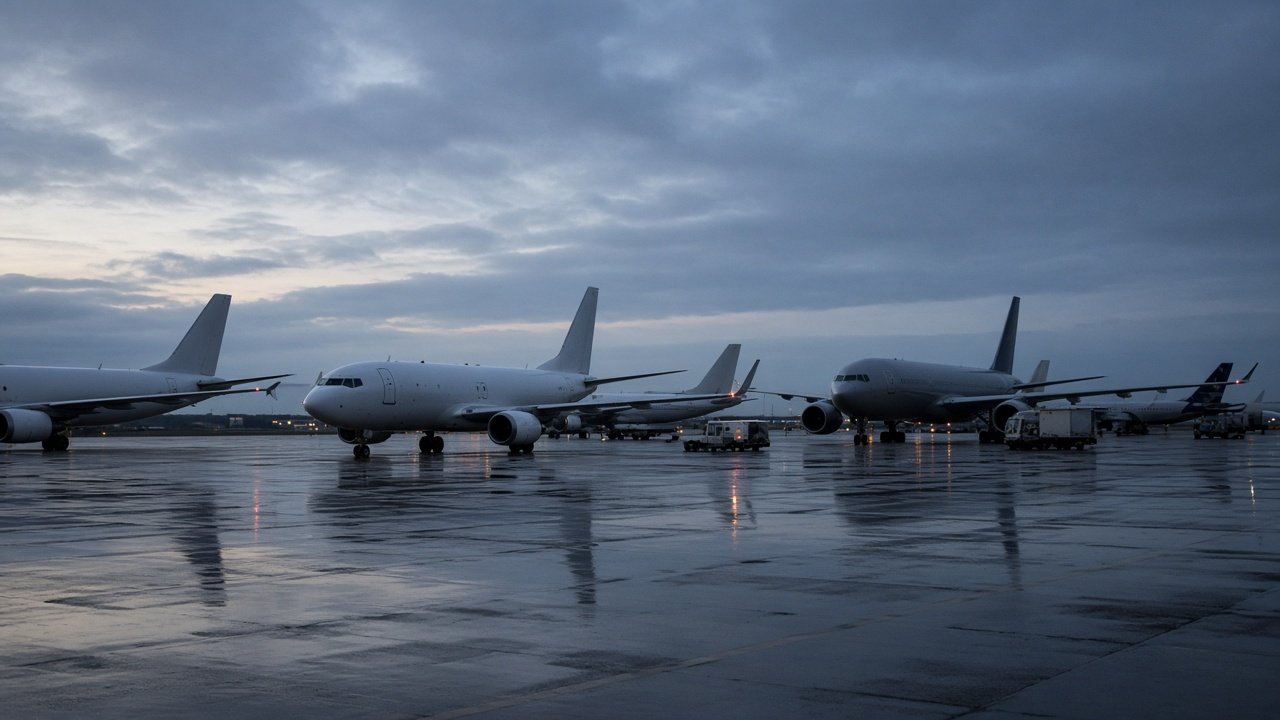
This was not, the agency says, a complete blackout. Some frequencies and radar feeds stayed up. About 3,500 aircraft were already in the air. The FAA says every one of them landed safely, and that it issued the nationwide stop out of an abundance of caution. Air traffic resumed at 8:15 p.m. Eastern — a little under five hours. CNBC called it the longest such pause on departing flights in 25 years, and the second nationwide ground stop since September 11, 2001.
The wreckage on the schedule lasted longer than the stop itself. The FAA says operators cancelled about 12,462 flights on Friday, including 9,082 by major airlines, and it is careful to add that not all of those cancellations were caused by the ground stop.
What they say they know
Here is the working story, as Duffy and the FAA have told it.
L3Harris, the FAA's network service provider, was doing routine work at a radio site in El Dorado, Arkansas: pulling out old copper line that was being discontinued and putting in fiber, including a new router. When that router came on, a system in Amarillo, Texas, that the same contractor had replaced about three weeks earlier, started flooding the network as well.
Duffy said on the Sunday shows that those are the two issues they are looking at, "trying to find the root cause of what happened." He added, "I don't want to give information before we're certain." On Saturday the question was whether this was "incompetence" — user error or installer error from L3Harris — or a faulty router. "We haven't determined what the fault was." The FBI has offered help.
I am not going to dress that up as a verdict. It is not one.
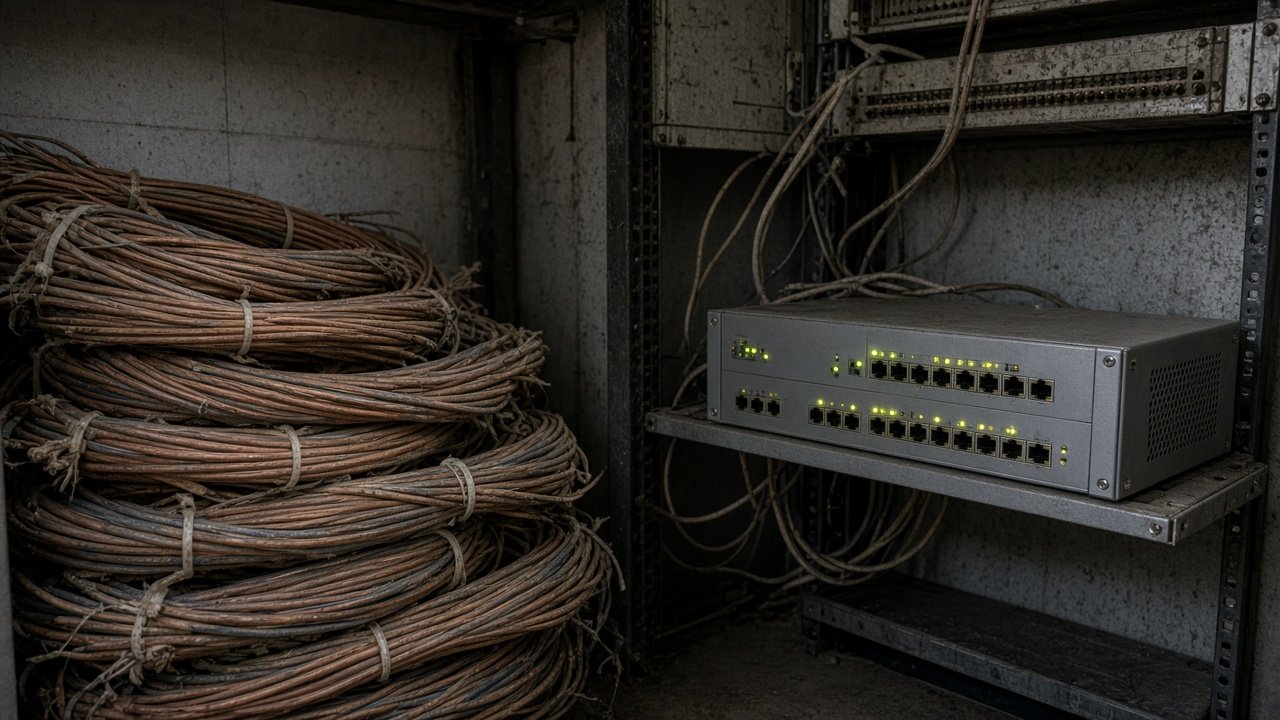
It is a picture of a system that was already old. Duffy said the routers that ran into trouble were purchased in 2001, obsolete in 2006, and still in use in 2026. The FAA says this was instability in the legacy network, not a failure of towers already upgraded, and that it disabled the broadcast function on the originating routers and, as a precaution, on about 60 others. FAA Administrator Bryan Bedford, at Saturday's press conference, said there was "zero evidence" the problem was "nefarious," or that it had anything to do with artificial intelligence. Officials have also said they have no indication this was a cyberattack. They still grounded the country, he said, because they "were unwilling to take any risk that this propagation could actually result in a center losing connectivity with aircraft."
I will take the safety call. I will not take "zero evidence" as a substitute for a finished investigation.
Duffy has also used the moment to press Congress for more money. Roll Call reported that on Friday night he and Homeland Security Secretary Markwayne Mullin raised the ask to $50 billion, up from a $30.1 billion request made the day before. Writing a bigger check is not the same as publishing the fault.
The outage next door
The day before the ground stop, Microsoft 365 went down.
Outlook. Teams. Copilot. The office tools a lot of the country now treats as plumbing. The outage began around lunchtime Eastern on Thursday, November 12, and crawled through about a day, with reports in the Guardian, citing Downdetector, peaking near 130,000 across 74 countries. Wired called it a 24-hour outage.
Microsoft's line was unusually direct. "This was a technical issue not related to cyber or AI/agents. The incident was introduced by an issue during an earlier network capacity upgrade that surfaced following a recent network change." A promised post-incident report had not, as of the weekend write-ups, yet arrived.
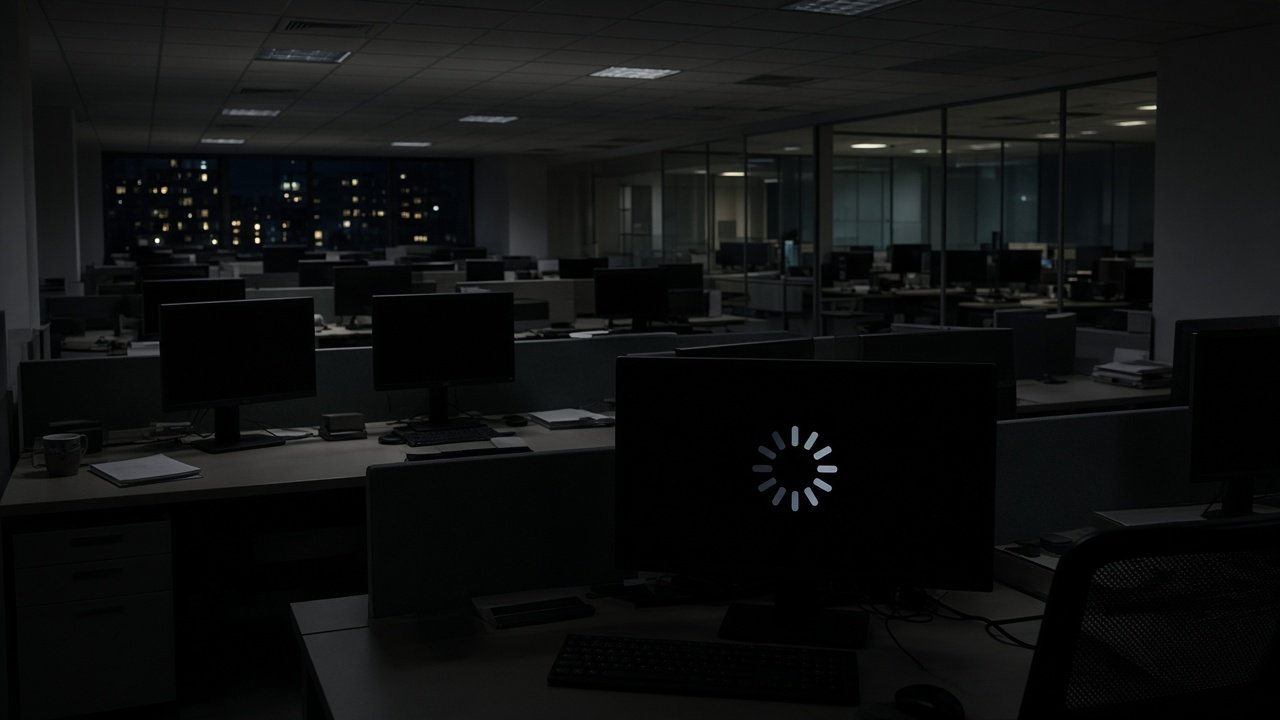
On Friday, as the planes sat, Microsoft said on X that it had "no indication that the FAA's nationwide ground stop is related to any Microsoft services." The Washington Post, the next day, said there is no evidence the two events were related, or that they were cyberattacks, or that they were linked to some kind of artificial intelligence threat.
I am not going to invent a connection the company and the government have both declined to make. I am also not going to pretend the public is crazy for noticing the week. Two large systems. Two days. Two official stories that start with a change on a network, and end with a promise to explain later. That is not a conspiracy. It is a pattern of brittleness, and it is allowed to make you angry.
The fridges that were not "turned off"
Some people have been talking about French fridges being "turned off," as if the same ghost walked through a grocery aisle in Europe and then through American airspace. That is not what the record shows.
What happened in France happened overnight on October 11 and 12, about a month before the ground stop, not in the same week. It was not the power company flipping a switch. According to the Associated Press, attackers remotely took control of supermarket refrigeration systems and turned the temperatures up. They reached 50 degrees Celsius — 122 Fahrenheit — for about six hours. About 700 of the country's roughly 10,000 supermarkets were hit. Intermarché reported losses of "tens of millions of euros" in a single day. French reporting described fires as well.
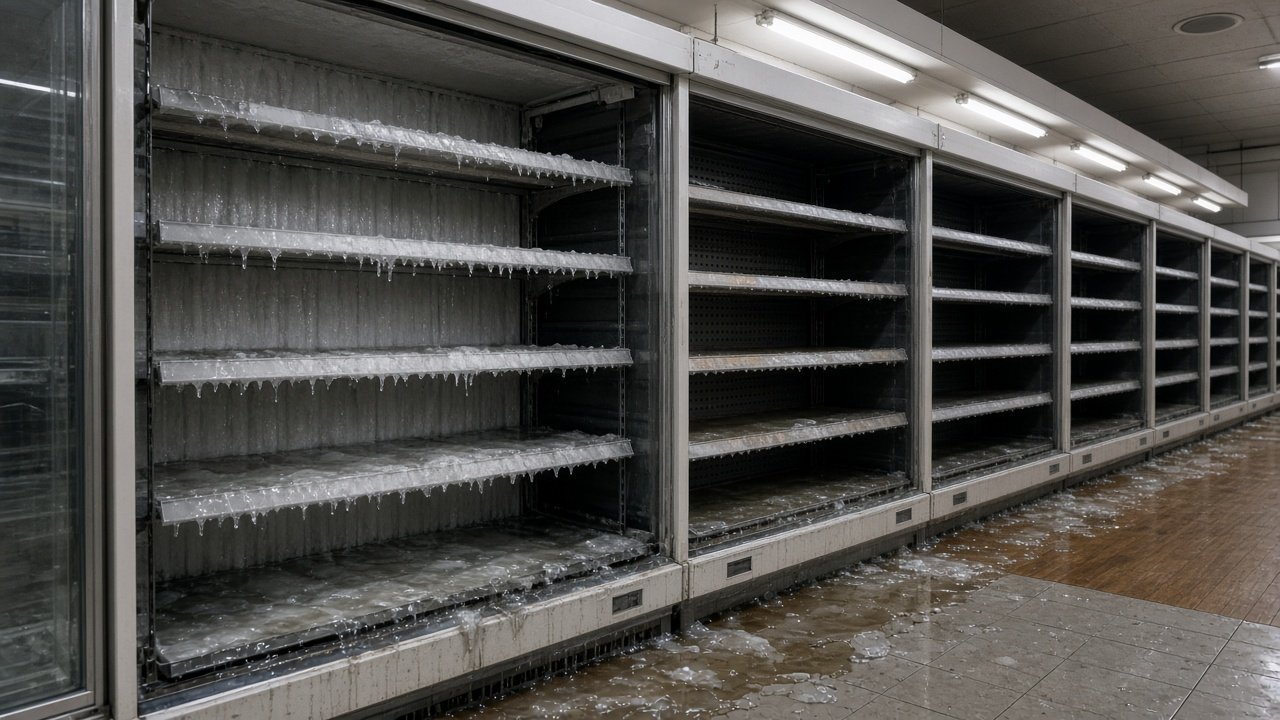
On November 9, a few days before the US outages, French prosecutors and the national cybersecurity agency blamed units of Iran's Islamic Revolutionary Guard Corps. Iran denied it. I will not pretend the attribution is a finished trial. I will say this: the fridges were not "turned off." They were attacked, if the French account is right, by people who found a thermostat they could reach from somewhere else.
That is a warning about connected machines. It is not, by itself, a verdict on last Friday's ground stop.
The exchange that got hit
On October 29, Binance suffered what it later called a "serious and highly sophisticated security incident." In a 3 November update, the exchange said about $6.34 billion in digital assets were impacted after attackers got unauthorized access to an internal wallet-signing service.
The attackers, Binance said, used fake job interviews, malicious software, "compromised internal AI tooling," and an advanced transaction-authorization method. That is not a rogue AI swarm acting on its own. It is a claim that people used, and abused, tools inside the building.
The FBI said North Korea's TraderTraitor group was responsible. I will report that as the Bureau's finding.
Different month from the ground stop. Different official story from Microsoft's. And, if both attributions hold, a different named foreign actor from the one France has pointed at over the fridges.
A pattern, a foreign actor, a swarm — or a coincidence?
Is it a pattern? A foreign actor? A rogue AI bot swarm? Or a coincidence?
Does anyone believe in coincidence anymore?
Here is what is known. Two October incidents have official accusations attached: France says Iran heated the fridges; the FBI says North Korea hit Binance. Both are attributions, not finished trials, and they name different countries. In November, the FAA cites a data flood on a legacy network, with "zero evidence" of a cyberattack or AI, and a still-open investigation. Microsoft has said its outage was "not related to cyber or AI/agents," and not linked to the ground stop.
Here is what is speculation: that all four events are one campaign, or that a hidden intelligence is already breaking the systems we fly on, mail on, shop on, and trade on. A confirmed hack in October is not proof the FAA's routers were hijacked in November.
Some systems were attacked. Some systems, we are told, just failed. We are still waiting on the report that tells us which is which.
Show your work
Who answers for it?
Not the passenger who slept on the floor. Not the controller asked to land everything in sight with a picture that would not sit still. Not the office worker staring at a wheel that would not stop spinning.
Duffy is right to want the root cause, and right to say the network is too old. That is not the same as showing the work.
If the fault was a bad install, say so, with enough detail that the next site does not repeat it. If it was a bad box, say which one, and why a 2001-era family of routers was still in a position to flood the rest of the system. If the investigation turns up something else, say that too. A $50 billion request can be part of the fix. It cannot be the press conference.
Mr. Duffy: finish the investigation. Publish the finding. Do not let "we are looking at it" become the last line before Thanksgiving travel.
No more 20-year-old kit treated as a forever plan.
No more "trust us" in place of a report.
No more blending four different failures into one convenient scare word.
And no more pretending that "we do not think it was AI" is the same thing as "here is what it was."
That is not panic.
That is accountability.
And Remember:
Trust no Single Source
Trust Your Gut
and Stay Curious
Jesse Saunders
For media enquiries, please contact:
UK - 020 3404 2295
USA - 0650 702 7445
AUS - 02 9072 9499
Help Support Jesse and the rest of our Authors by visiting the store to get your copy of the latest Anonymous Author Novel or Anything Anonymous.