It's Not Even Winter: Coventry's Hospitals Declare a Critical Incident, and the Nurses Carry It Again
Coventry's hospitals declared a critical incident on an ordinary Monday in November, the second since September. Sally Joe asks why every autumn now feels like a crisis, and why it's always the nurses who carry it.

Check the calendar. It's the middle of November. The clocks have only just gone back, the Christmas lights are barely up, and nobody has had to scrape a windscreen in anger yet.
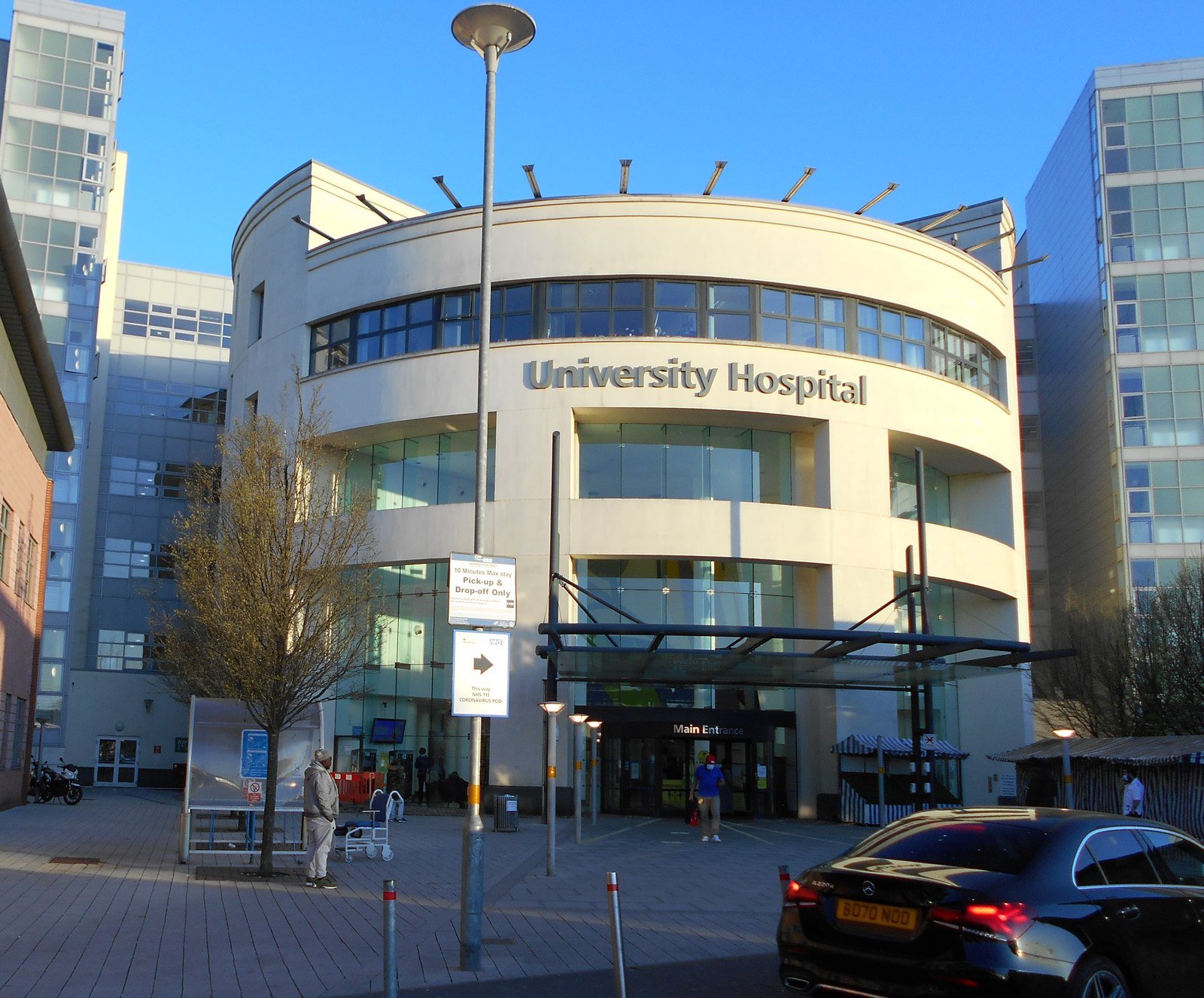
And yet here we are. On Monday, University Hospitals Coventry and Warwickshire declared a critical incident.
Not in a January flu surge. Not in a snowstorm. On an ordinary Monday in autumn.
What actually happened in Coventry
The trust said it was under "severe and sustained pressure" with "exceptionally high demand", particularly in its Emergency Department at the Walsgrave site. Live data that afternoon showed a six-hour wait at A&E and more than two hours at the children's A&E.
Six hours. Two hours with a poorly child on your lap.
Gabrielle Harris, the trust's chief operating officer, said: "Our teams are doing everything they can, but the level of demand is placing considerable strain on our services." She asked the public to keep the Emergency Department "available for those with the most serious and life-threatening conditions", and to use NHS 111, GPs and urgent treatment centres for everything else.
Then came the apology: "We recognise that some patients are facing longer waits than we would want, and I sincerely apologise for this."
I'll give her that. An apology is more than most of us get. And the trust's line on Facebook was honest enough: declaring a critical incident is "not a decision we have taken lightly, but it enables us to manage the pressure on our services and protect patient safety."
For anyone who has never had to learn the jargon, the BBC put it plainly. A critical incident is declared when a hospital is under extreme pressure that threatens its ability to deliver safe and effective care.
Safe and effective care. That's the whole job. And a major teaching hospital has just told the public it can't promise it.
Second time since September
Here's the bit that should make every Coventry family sit up.
This is not the trust's first one this autumn. UHCW declared a critical incident on 9 September, for 24 hours, after exceptionally high demand for emergency care and pressure on its beds. The chief nursing officer, Tracey Brigstock, said at the time it was "necessary to protect patient safety".
September. When half of us were still in shorts.
So that's two emergencies in roughly ten weeks, and the proper winter hasn't even turned up yet. If your boiler broke down twice before the cold weather arrived, you wouldn't call it bad luck. You'd call it a bad boiler, and you'd want to know who fitted it.
It isn't just Coventry
I'm from Nottingham, so forgive me for looking up the road.
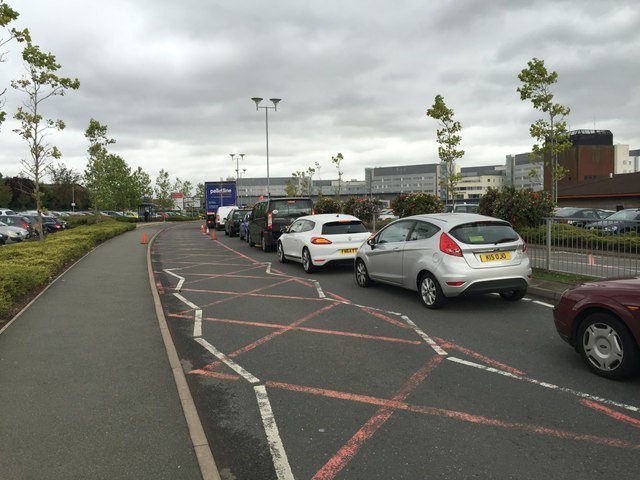
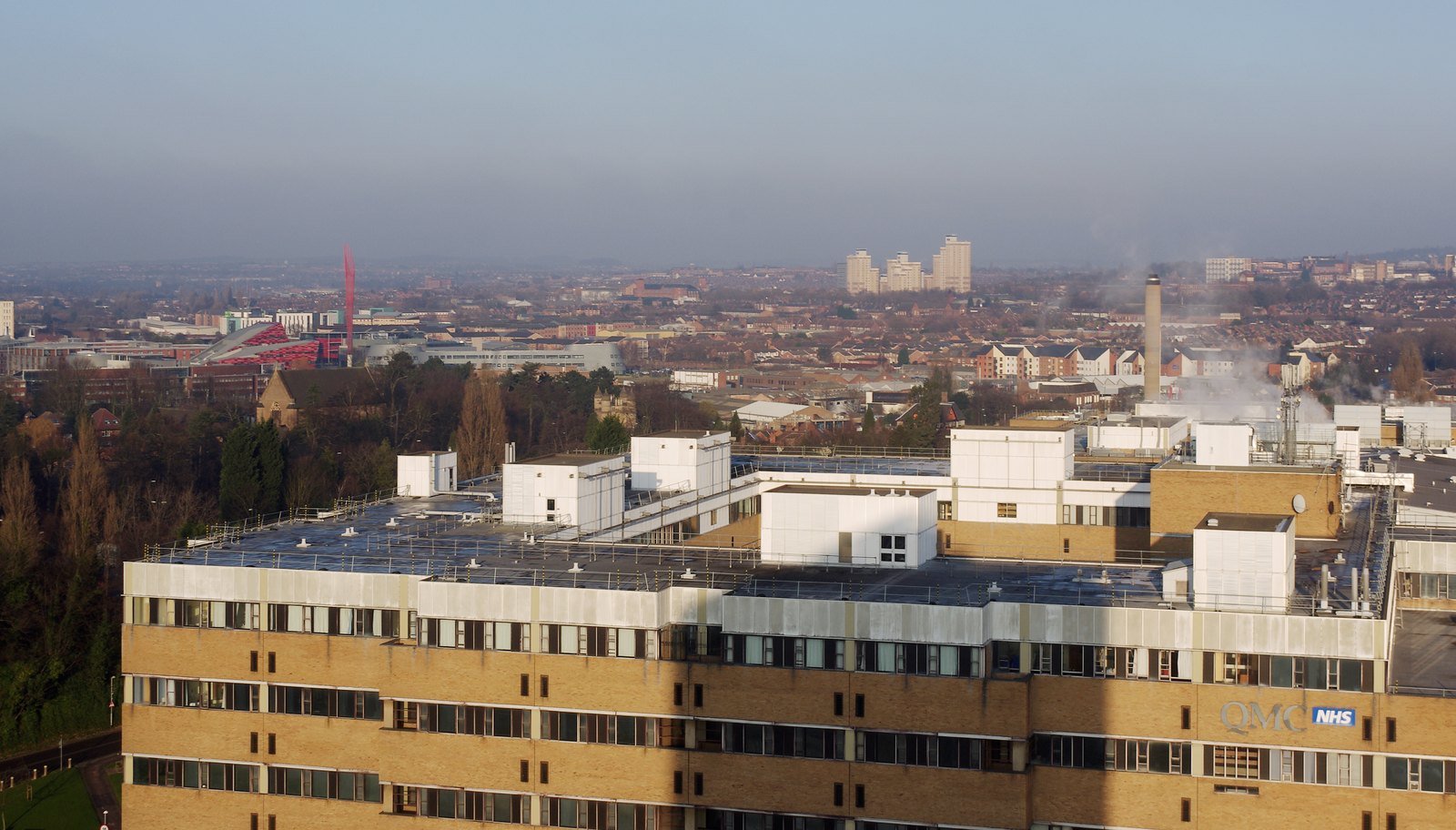
Last month Nottingham University Hospitals declared its own critical incident, after the A&E saw three of its highest attendances on record in the space of a fortnight. Then on 6 November the Care Quality Commission said urgent and emergency care at the Queen's Medical Centre still "requires improvement".
The inspectors found A&E often caring for more patients than it was designed for, with people treated in corridors. The CQC's Carolyn Jenkinson said staff "didn't always properly monitor people" in those conditions, and then added the line I keep coming back to: "Leaders didn't always give staff enough support to keep people safe."
Read it again. Not "staff didn't care". The watchdog said the patients and families were largely positive about the staff. It was the support from above that fell short.
The chief nurse at NUH, Tracy Pilcher, didn't dress it up either. She said there were "too many patients being cared for in corridors and unacceptable spaces."
Down in Cornwall, the Royal Cornwall Hospitals Trust had set itself a goal of ending corridor care at Treliske by the end of October. They nearly managed it. Then November arrived, the patients surged, and by 5 November they were three days into a critical incident with patients back in corridors across the hospital.
The trust's acting chief executive, Kim O'Keeffe, told her board: "It isn't just sub-optimal care for our patients - we have to recognise that this also has an impact on workforce resilience as well as our financial recovery."
Patients, staff, and the finances. In one breath. I know which of those three keeps the board awake. I know which one gets the extra shift.
The numbers nobody wants to say out loud
Zoom out to England as a whole and October was, according to the Royal College of Physicians, the busiest month on record for A&E, with more than 2.5 million attendances.
57,840 patients waited more than 12 hours in an emergency department after the decision had already been made to admit them. The highest October figure on record, and 6.5% up on last October.
On an average day in October, 840 patients were treated on wards in spaces not designed for patient care. There were 2,718 instances of corridor care reported in emergency departments every day.
And not one of the 120 trusts with a major A&E hit the 95% four-hour standard. Not one.
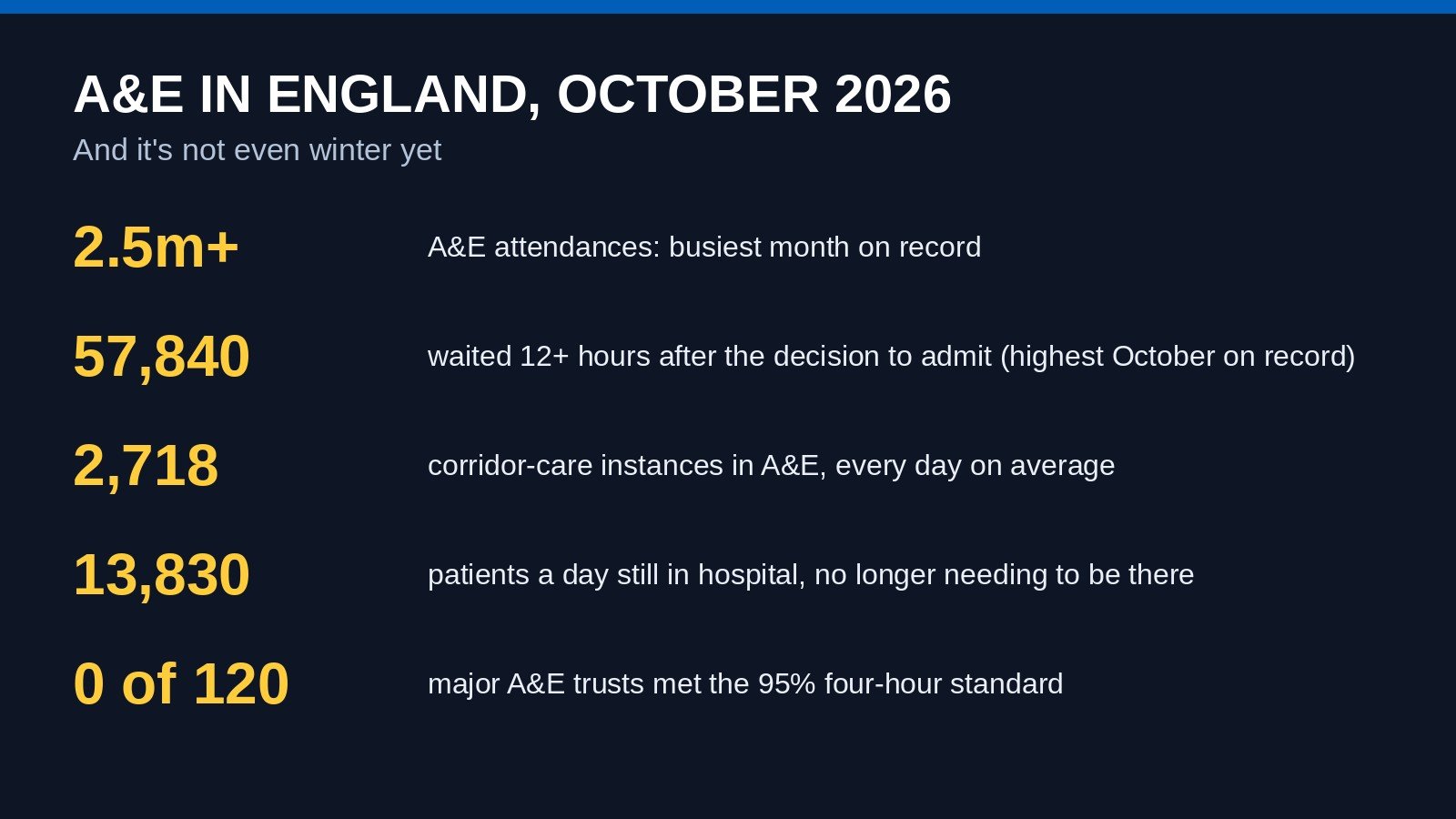
The figure that should really make us angry, though, is this one. On an average day, 13,830 people were still in a hospital bed despite no longer meeting the criteria to be there. Well enough to leave. Nowhere safe to go.
The RCP says three in four physicians have had delays discharging patients, with social care placements, rehabilitation and safe housing among the biggest blockages. Its clinical vice president, Dr Hilary Williams, spoke of "the extraordinary pressure the NHS is already facing as we head towards winter."
As we head towards winter. Not in it. Towards it.
My mum, and the bit nobody fixes
I'll be honest about why this one gets under my skin.
My mum waited months for her NHS treatment. What wore her down wasn't the nurses. They were lovely, every single one. It was the not knowing. The letters that didn't come. The phone that rang out. The feeling that somewhere above the ward, a system had simply decided she could wait.
That's what a critical incident looks like from the inside of a family. It isn't a press release. It's your nan on a trolley under a strip light. It's your little one with a temperature and a two-hour queue. It's a nurse who started at seven, is still there at nine, and is about to be told she's a "workforce resilience" issue.
Notice, too, who the public gets asked to be kind to. Coventry's statement thanked staff for their "exceptional commitment" and asked us to treat them "with patience, kindness and respect". Quite right. Shouting at a nurse because the system is broken is like kicking the postman because the bill went up.
But here's my question. When the same trust declares the same emergency twice in one autumn, who gets asked to explain themselves? Because I can tell you who carries it. The nurse who misses her own kids' tea time. The porter pushing beds that have nowhere to go. The junior doctor triaging in a corridor.
The statements get signed at the top. The shifts get worked at the bottom.
Here's my position
I'm not one of those people who thinks the NHS should be torn up and sold off. I love it. My family has leaned on it my whole life. That's exactly why I won't pretend this is normal.
So here's what I want, and none of it is complicated.
Fix the back door, not just the front. Those 13,830 people a day who are fit to go home need somewhere to go. That means social care that is properly funded and properly staffed, not another winter plan announced in a hurry once the corridors are full.
Make a critical incident mean something. If a trust declares two in a season, the board should publish, in plain English, what went wrong, what has changed since the last one, and who is answerable. Not a slide deck. A name and a plan.
Back the people on the floor. If the watchdog says leaders didn't always support staff to keep people safe, then the support has to come before the next inspection, not after the next headline.
And stop calling it a winter crisis. A crisis that turns up in September and returns in November isn't a season. It's a system.
Every November now
I remember when "winter pressures" meant January. A bad flu year. A cold snap. Something you could point at.
Now it starts before the clocks go back and the excuse is always the same: demand. As if sick people were a surprise. As if nobody could have guessed that an ageing country would need beds, carers and nurses in roughly the same numbers next year as this year.
Nobody told the rest of us that a critical incident would become a calendar entry.
Same corridors. Same apologies. Same nurses holding it together.
And it's not even winter yet.
And Remember:
Trust no Single Source
Trust Your Gut
and Stay Curious
Sally Joe
For media enquiries, please contact:
UK - 020 3404 2295
USA - 0650 702 7445
AUS - 02 9072 9499
Help Support Sally Joe and the rest of our Authors by visiting the store to get your copy of the latest Anonymous Author Novel or Anything Anonymous.