Lowest Prices, Offshore Jobs: Bunnings Cuts 350 Tech Roles and Keeps the Sizzle
Bunnings is cutting 350 technology roles and handing the work to Tata teams in Australia, India and the Philippines.

Three hundred and fifty.
That is the number Bunnings put on its technology team on Tuesday. Two hundred and thirty permanent roles, made redundant. One hundred and twenty contractor engagements, brought to an end. The work, the company says, will go to Tata Consultancy Services — to teams in Australia, and also in India and the Philippines.
Bunnings is allowed to do this. I will say that first. It is a private company, owned by Wesfarmers, and it does not need my permission to change how it buys its software support. Shareholders are not a community sausage sizzle. They are, as a rule, fond of lower costs.
What it is not entitled to, at least not without being called on it, is to keep selling the local story as if nothing behind the login screen has moved.
A necessary change, apparently
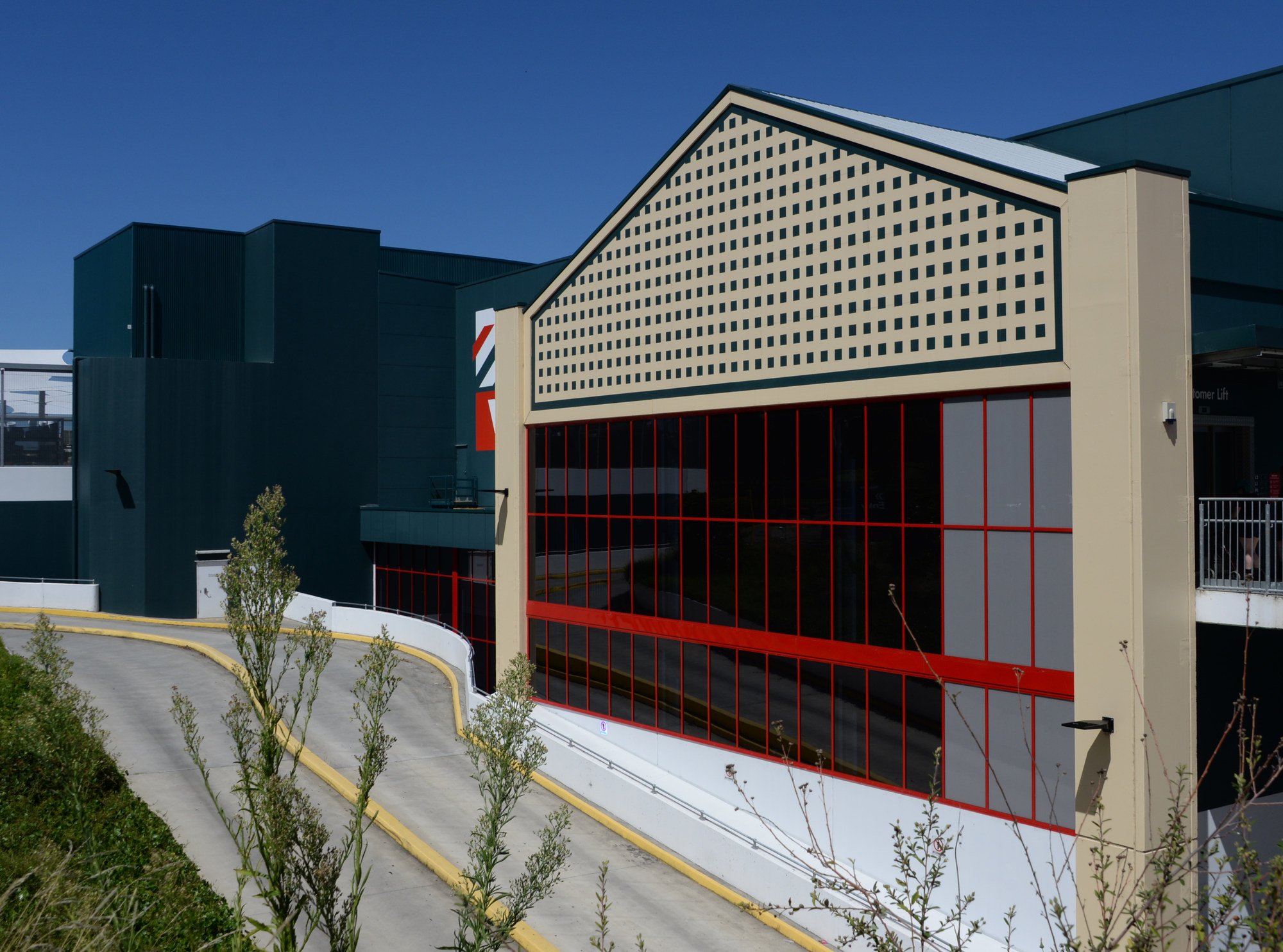
Managing director Mike Schneider called it "a necessary but important change." Necessary is doing a lot of work in that sentence. Important, I will grant him. If you are one of the 350, it is important in the way a letter from HR is important.
"We need a technology model and partner that keeps pace with our customers so that we can continue to deliver the service, value and helpful advice people expect from us," he said.
The helpful advice, I assume, will still come from the person in the green apron. Store teams are not in this round. Bunnings says it employs more than 50,000 people across Australia, including 12,000 new team members in the past year, and more than 3,500 new casuals for Christmas and summer. Those figures are the company's.
A core in-house technology team of about 500 will stay in Australia. That matters. This is not the whole department being put on a plane. Tata will also have teams here, not only in India and the Philippines. Anyone who tells you all 350 jobs are "going to India" is not reading the statement.
The transition starts in December and runs through June 2027, with the new operating model supposed to be in place from July. Impacted staff, Bunnings says, will be kept in their roles through Christmas, with the changes taking effect in the new year. Redundancy packages, career transition, redeployment where possible, and wellbeing support are all on the list.
I have seen this calendar before. Announce in November. Thank them through the pudding. Make the change in January. It is tidier that way.
Staff heard it first from chief information officer Genevie Elliott, on a virtual meeting. She called it "difficult news to share." The decision, she told them, was not a reflection of anyone's performance, contribution or value. Over the last two years, she said, the company had strengthened its tech function, and "that structure has served us well."
"I don't want anyone thinking those changes didn't work. They did. But this decision that I'm sharing today builds on that work."
Then the other reason, which sits closer to the bone. Bringing Tata on board, she said, would let the company drive down business costs and tap "specialist expertise and global retail experience."
"We need a model that allows us to remain competitive without continually increasing our costs. This partnership will help us do that."
There it is, without the varnish. Costs. I prefer that to "the way customers are choosing to shop," which is how the company also framed it. Those are not the same sentence.
The sizzle, and the slogan
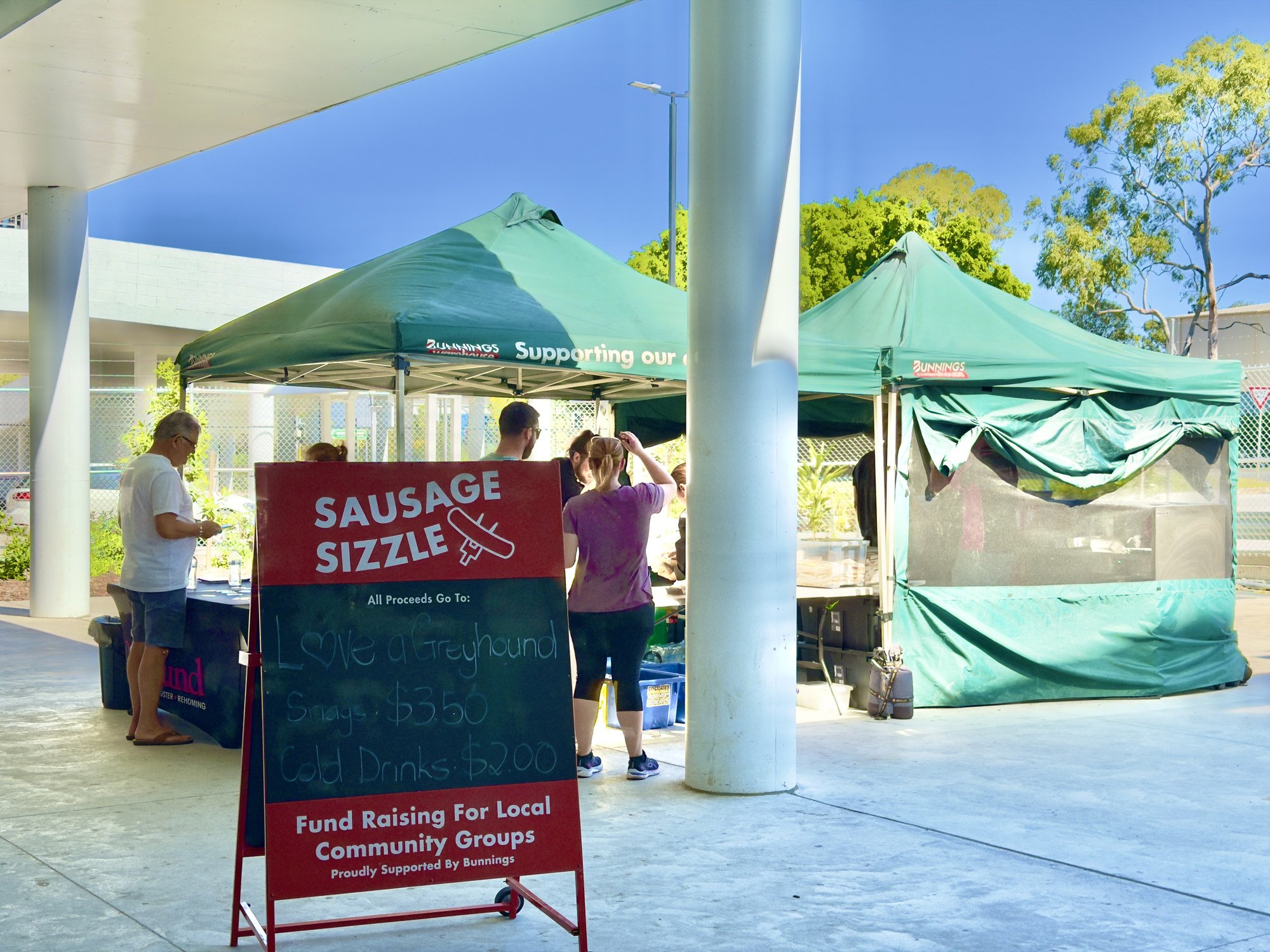
Bunnings has always been very good at looking like Australia. The sausage sizzle in the car park. The community football clubs on the tongs. The "people business" line Schneider reached for again on Tuesday: "our stores and our team remain at the heart of the experience we provide customers."
Earlier this year the company and the AFL ran a National Footy Sausage Sizzle, with more than 260 community clubs on the barbecue for the weekend. In a speech this year Schneider called Bunnings "a uniquely Australian story" and "Australia's most trusted and iconic brand." On Tuesday, in the same breath as the redundancies, the company said it "continues to invest in Australian jobs."
It does, in the warehouses. It is also moving a greater proportion of its technology services to a global contractor. I am not asking it to run a charity. I am asking it to stop talking about the car park as if the car park is the whole company.
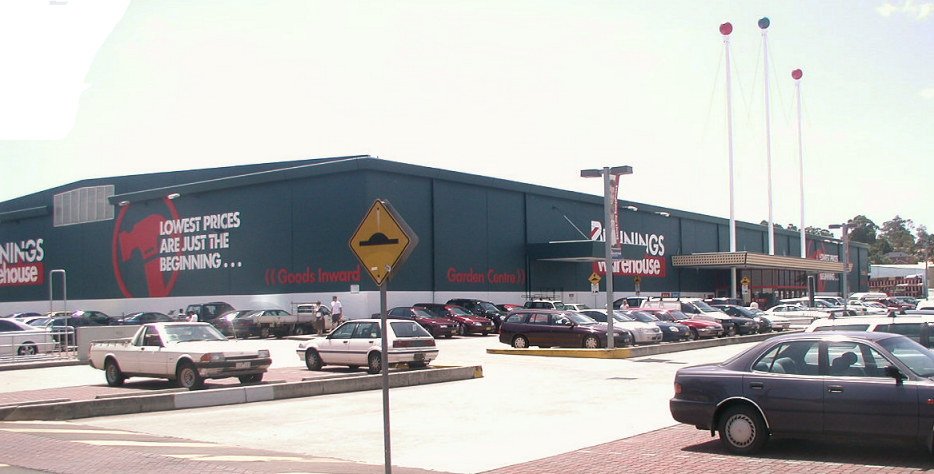
You may remember the line. Lowest prices are just the beginning. It sat on the sides of stores, on the aprons, on the ads, for a quarter of a century. In 2020 Schneider said it had not been retired, only used "periodically." As recently as April last year the company was still saying the line was part of its lowest-prices policy, and that there were assets in the market featuring it.
Lowest prices. Offshore jobs. The beginning, it turns out, was the easy part.
The sister company already did it
If the name Tata is new to the Bunnings customer, it should not be new to Wesfarmers.
In May, Officeworks — same parent — announced it was offshoring hundreds of jobs to India and the Philippines. Dozens of staff at a Western Sydney customer service centre were told their roles were redundant and would be replaced by a call service in Manila. Other support-office work, the ABC reported, was to move to Bengaluru. Officeworks said the decision was difficult, and part of a transformation so it could "continue to offer customers low prices."
Low prices. There is that phrase again.
The ABC, reporting Tuesday's announcement, put Bunnings in a growing list: Qantas, NAB, Officeworks, Woolworths and Coles. Woolworths, in June, said it would offshore hundreds of corporate roles, including in IT. Qantas, last week, said about 850 corporate jobs would go under an Accenture deal, with most of the work shifting to India. Those stories are not identical. They are a climate.
Wesfarmers did not have to follow Officeworks. It has chosen to rhyme with it.
Who answers when it breaks?
I used to contract in IT. I have sat on the local end of a job that had been "transitioned" to a partner in another time zone, and I have been in the room when something broke at four o'clock on a Friday and the people who built it were no longer in the building.
I am not forecasting a Bunnings outage. I do not have a leaked memo, and I will not invent one. Plenty of companies offshore work and the lights stay on. Plenty also discover, about six months later, that the system still knows how to fail, and the people who knew why have already cleaned out their desks.
The question is not whether Tata can write code. It is a large firm, and Bunnings is paying it to be one. The question is who answers when the checkout does not, or the rostering system does not, or an online order sits in a queue at eight on a Saturday because a store in western Sydney is doing the trade the ads promised.
Accountability gets thinner when it has to travel. That is not a slogan. That is something I have watched, more than once, from a contractor's chair. You can buy scale. You can buy a night shift on the other side of the world. You cannot always buy the person who remembers why that particular server was never quite right, and who used to walk downstairs and fix it before the store opened.
Elliott told staff the company's existing technology, built by many of the people now being cut, remained in use across its network of stores. Quite. The tools will still be here. The people who nursed them may not be.
Bunnings also wants you to know it is leaning into artificial intelligence. Earlier this year it said it was the first Australian retailer to launch an AI-powered shopping agent, Buddy, on Google's Gemini platform, and that the bot had already generated more than 450,000 chats. That is the company's figure. A chatbot that can talk about timber is a fine thing. It is not a substitute for the people who keep the network under the timber aisle running.
They're allowed. That is not the argument.
I am not going to Canberra with a bill. If a company can get the same work for less, it will. That is the model. Customers like low prices. Boards like margins. The 350 people in the middle are the adjustment.
What I want is simpler, and ruder.
If you are going to cut the local tech team, do not stand in the car park talking about a uniquely Australian story as if the only thing that counts is the snag. Keep the sizzle. Keep the store jobs, and say so. Keep the 500 technologists who are staying, and say so. And then say the rest out loud: a greater share of the systems that run the place will be delivered by a global contractor, including teams in India and the Philippines.
That is a defensible commercial decision. It is a weaker advertisement.
Schneider said the company is in "a daily sprint to keep up with what our customers want and need, now and into the future." Customers want a cheap drill and a person who can tell them which bit fits. They also, I suspect, like the idea that the outfit selling them the drill is as local as it looks on a Saturday morning.
Bunnings can have the lower cost. It can have the partner headquartered in Mumbai. It can have Buddy, and the July 2027 operating model. It cannot have all of that and the old halo without someone pointing at the gap.
Lowest prices are just the beginning.
So, it turns out, is the offshoring.
Good luck with the sizzle.
And Remember:
Trust no Single Source
Trust Your Gut
and Stay Curious
Lee Robbins
For media enquiries, please contact:
UK - 020 3404 2295
USA - 0650 702 7445
AUS - 02 9072 9499
Help Support Lee Robbins and the rest of our Authors by visiting the store to get your copy of the latest Anonymous Author Novel or Anything Anonymous.